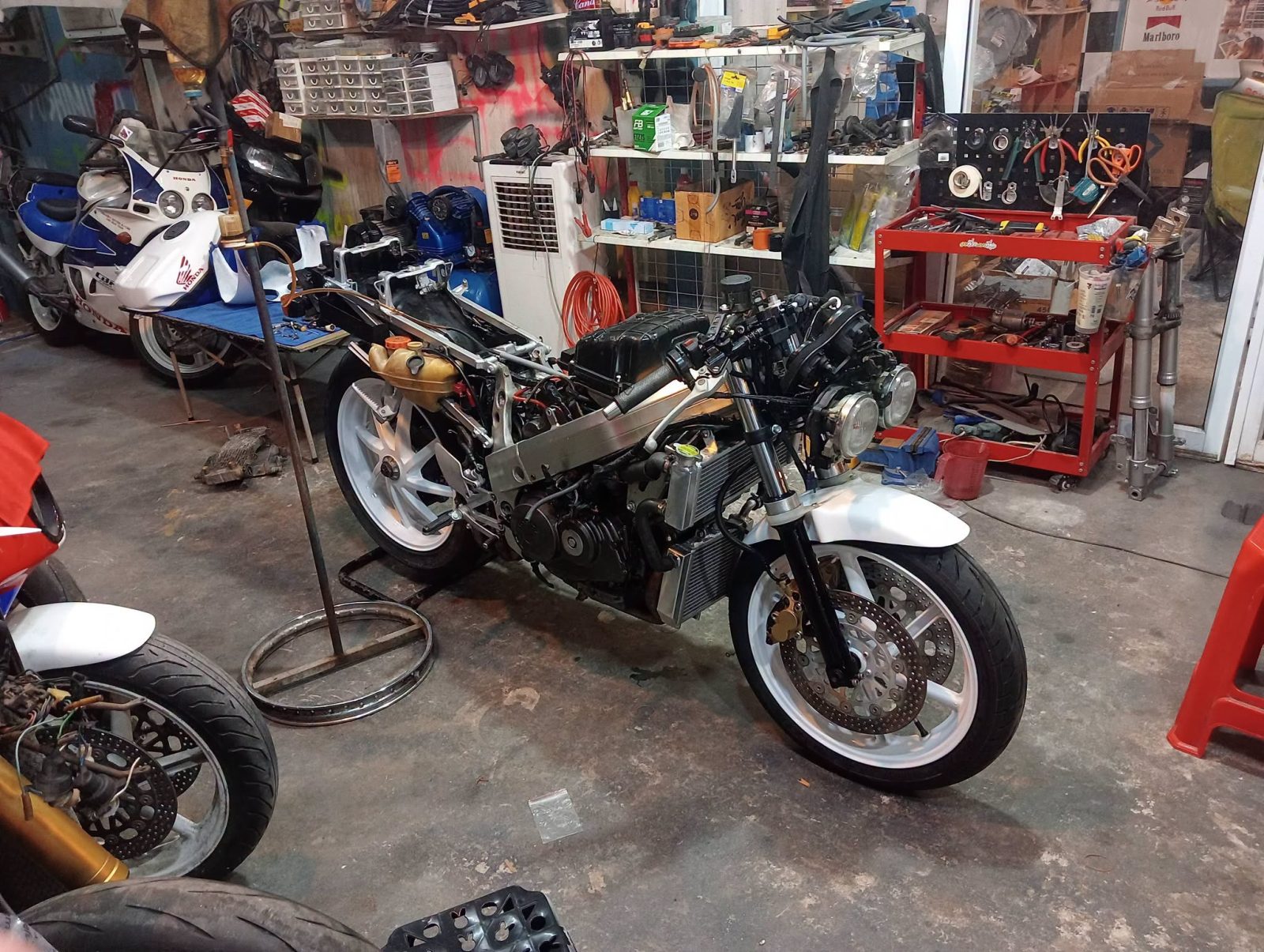
Full ground-up restoration — in progress at the workshop.
For Steve, this isn’t simply the restoration of a Honda VFR400R NC30.
It’s the fulfilment of a dream that began in the late 1990s.
At just 17 years old, Steve was already riding a 600cc sports bike. Like thousands of young riders across the North West of England during the late ’90s, weekends revolved around motorcycles. One of the most iconic meeting spots was The Fisherman’s Inn, known to everyone simply as “The Fish”, overlooking Hollingworth Lake near Rochdale. On any sunny weekend, the car park would be packed with sports bikes before riders headed out to enjoy the twisties around the lake.
It was on one of those rides that everything changed.
As Steve made his way towards Hollingworth Lake, two Honda VFR400R NC30s swept effortlessly past him through the twisties. Their compact size, unmistakable white tricolour bodywork and the unmistakable howl of Honda’s gear-driven V4 engines immediately caught his attention. Despite riding a larger-capacity machine, he watched the pair disappear into the distance before arriving at The Fish, where both NC30s were parked side by side.
Steve couldn’t take his eyes off them.
Even then, the styling looked years ahead of its time. Inspired by Honda’s legendary RC30, the single-sided swingarm, race-bred bodywork and unmistakable tricolour paint scheme made the NC30 unlike anything else on the road.
Standing there as a 17-year-old, Steve made himself a promise.
One day, he would own one.
Life, however, had other plans.
Over the following decades, Steve owned and enjoyed a succession of increasingly capable motorcycles, including a Honda CBR600F Sport, followed by Honda’s legendary Fireblade. Eventually, life took him to Thailand, where another Honda—the versatile CB600 Hornet—became his everyday bike.
Each motorcycle brought new adventures, but none ever replaced the memory of those two NC30s disappearing through the twisties on that summer afternoon in the late 1990s.
Years turned into decades, yet the search never truly stopped. Countless evenings were spent scrolling through Facebook Marketplace until, one day, Steve stumbled across Big Bike 90.
A conversation quickly became a plan, and after almost thirty years of waiting, the restoration of his dream motorcycle was finally underway.
This website follows every step of that journey—from the first bolt removed to the final polish. Every success, setback and milestone will be documented as this iconic Honda is painstakingly returned to the factory-correct showpiece Steve had dreamed of since he was seventeen.
Because some motorcycles are more than machines.
They’re dreams that simply take a little longer to find.
While this website was created to document Steve’s own NC30 restoration, it also serves a much bigger purpose. Having spent years building websites and showcasing businesses online, he wanted to create something that would do justice to the incredible craftsmanship involved in restoring classic motorcycles. Every project tells a story, and every skilled craftsman deserves recognition for their work. By documenting this restoration from the very first bolt to the finished showpiece, Big Bike 90 can proudly showcase its workmanship to enthusiasts around the world, while inspiring others to preserve these iconic machines for future generations.
Owner: Steve · Bike: Honda VFR400R NC30 · Engine: V4, gear-driven cams · Status: In progress · Started: July 2026
The restoration begins with complete disassembly. This is the stage where everything comes apart so we know exactly what we’re working with. The bodywork has been removed, the old paint stripped back, and every dent, repair and imperfection exposed. The fuel tank is already in fresh primer, ready for the next stage of preparation.
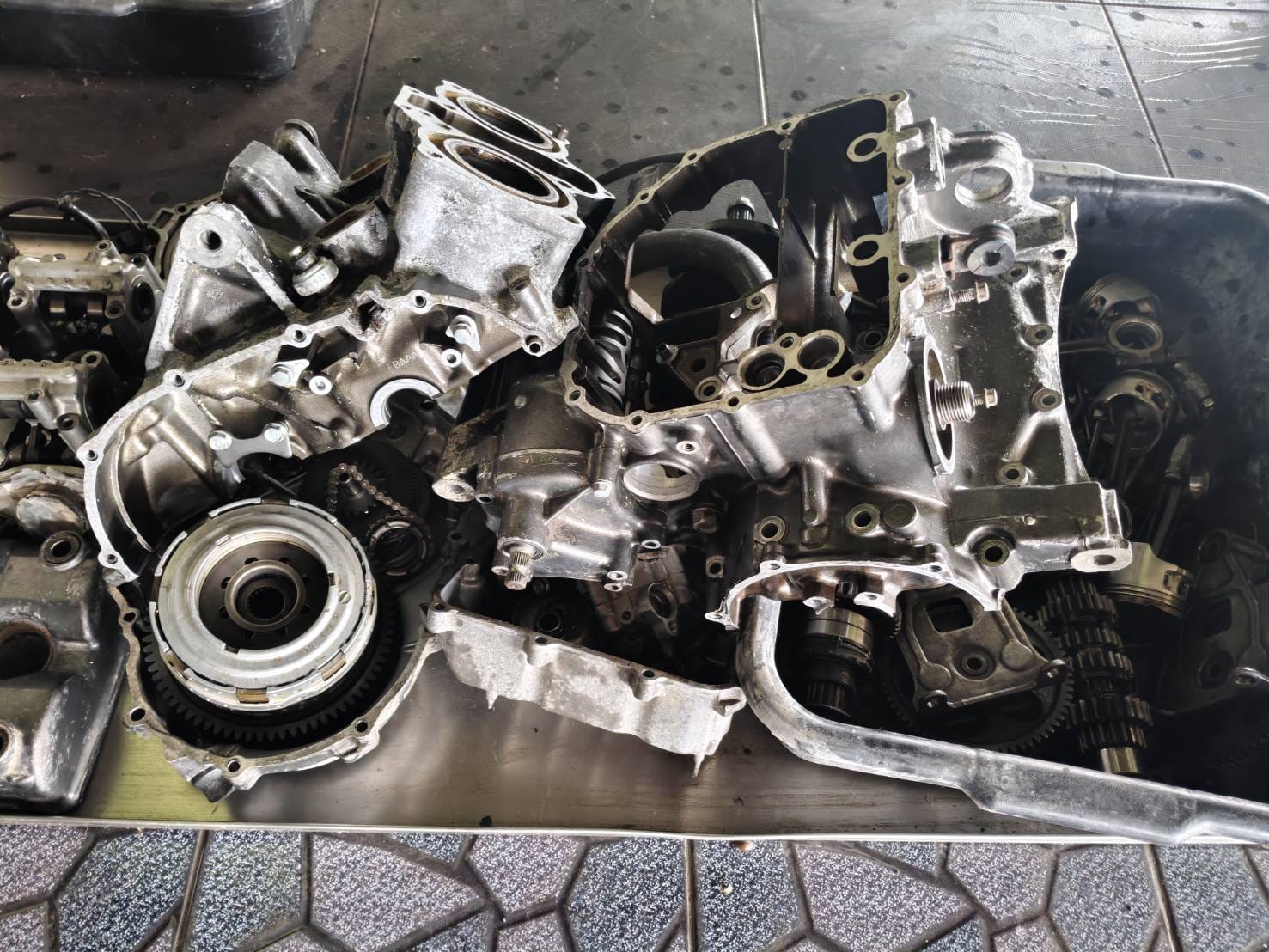
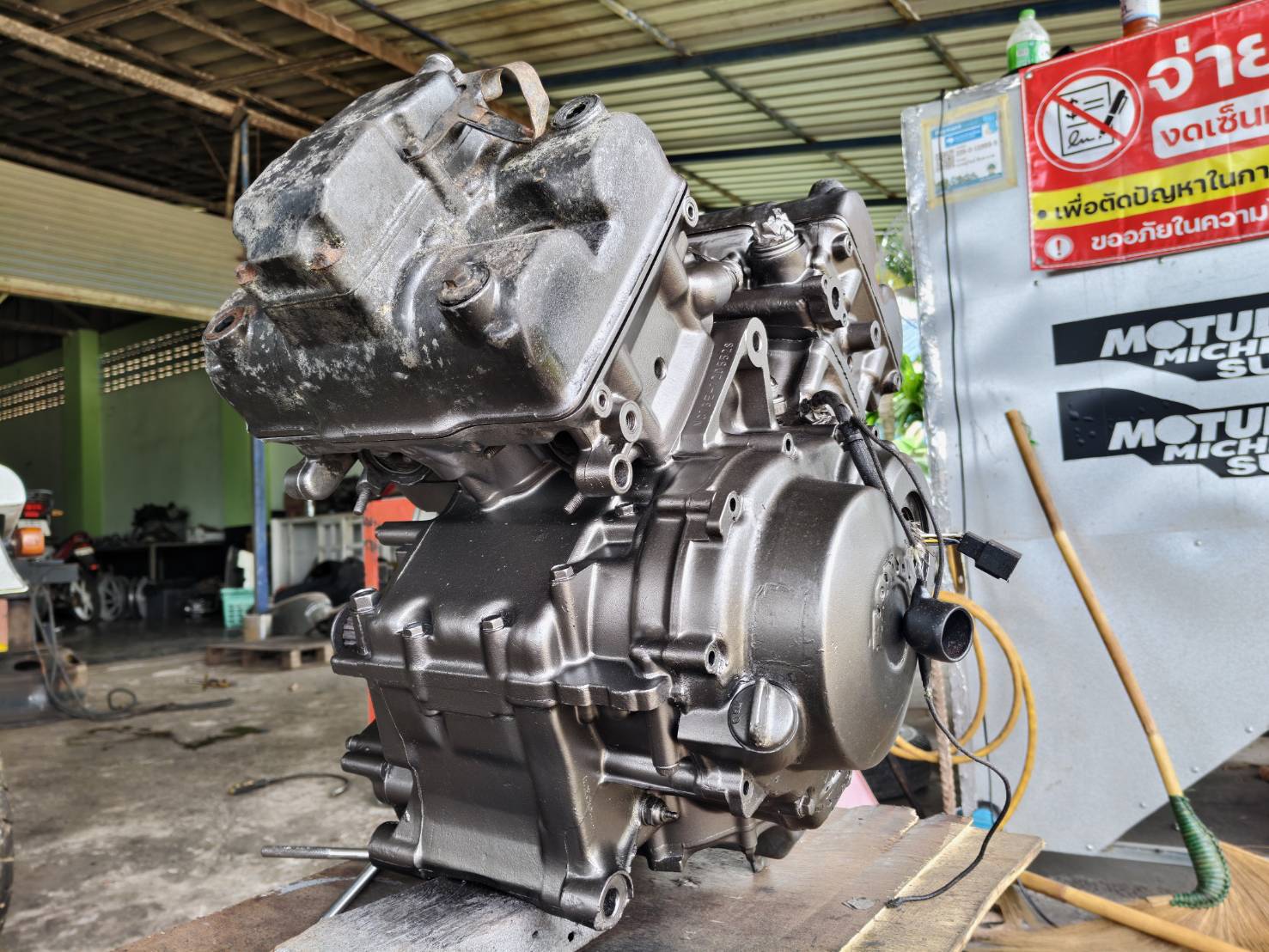
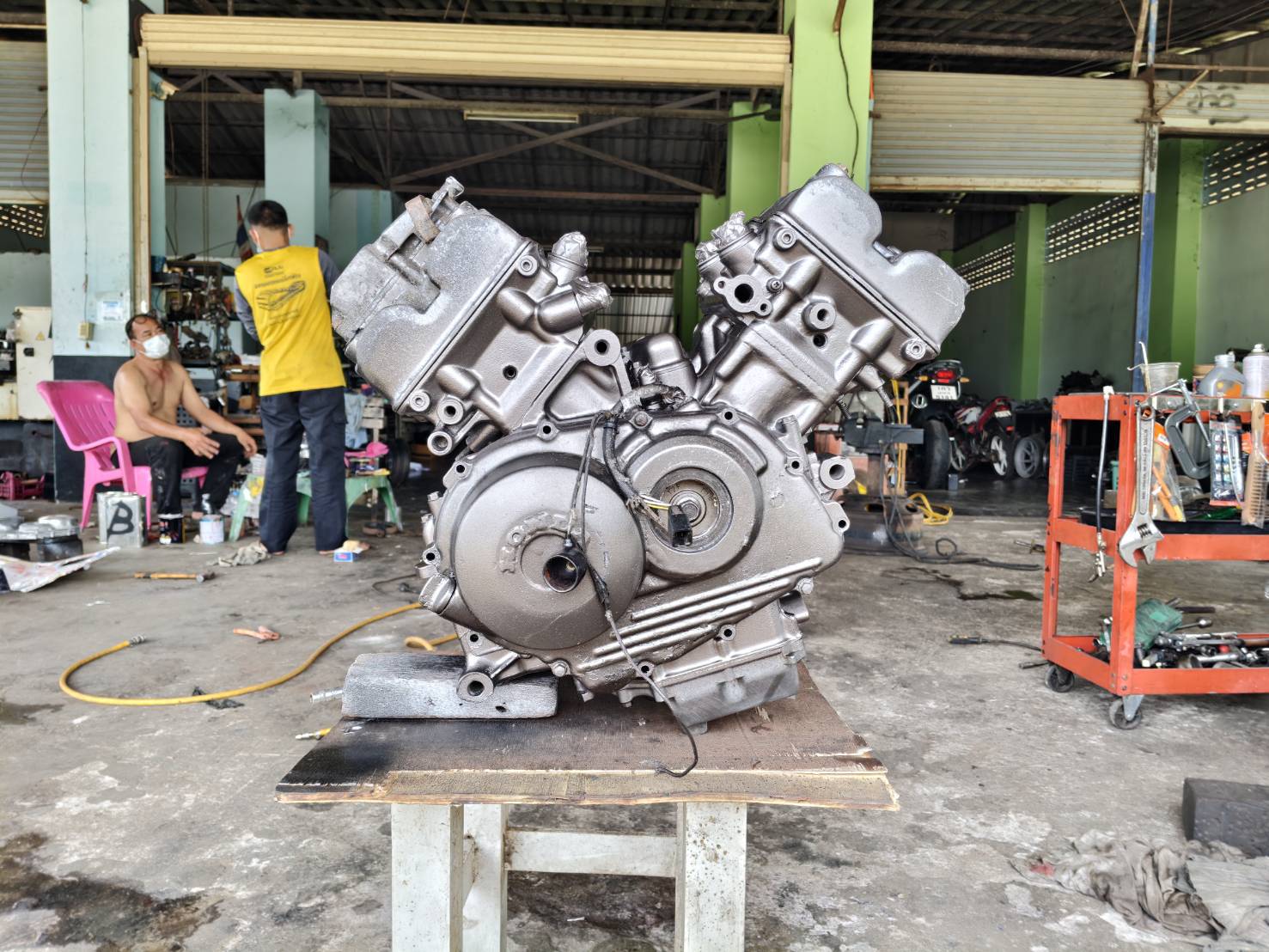
The heart of the NC30—the legendary V4 engine—has now been removed from the frame and completely stripped. The cylinder heads, cam carriers and Honda’s distinctive gear-driven camshafts have all been dismantled for inspection, while the crankcases have been split to expose the gearbox, clutch assembly and bottom end.
Every component is now being cleaned, inspected and measured before being categorised as reuse, refurbish or replace. This is where shortcuts are either taken—or avoided. By the end of this stage, there are no hidden surprises left inside the engine, giving us the perfect foundation for the show-quality restoration this bike deserves.
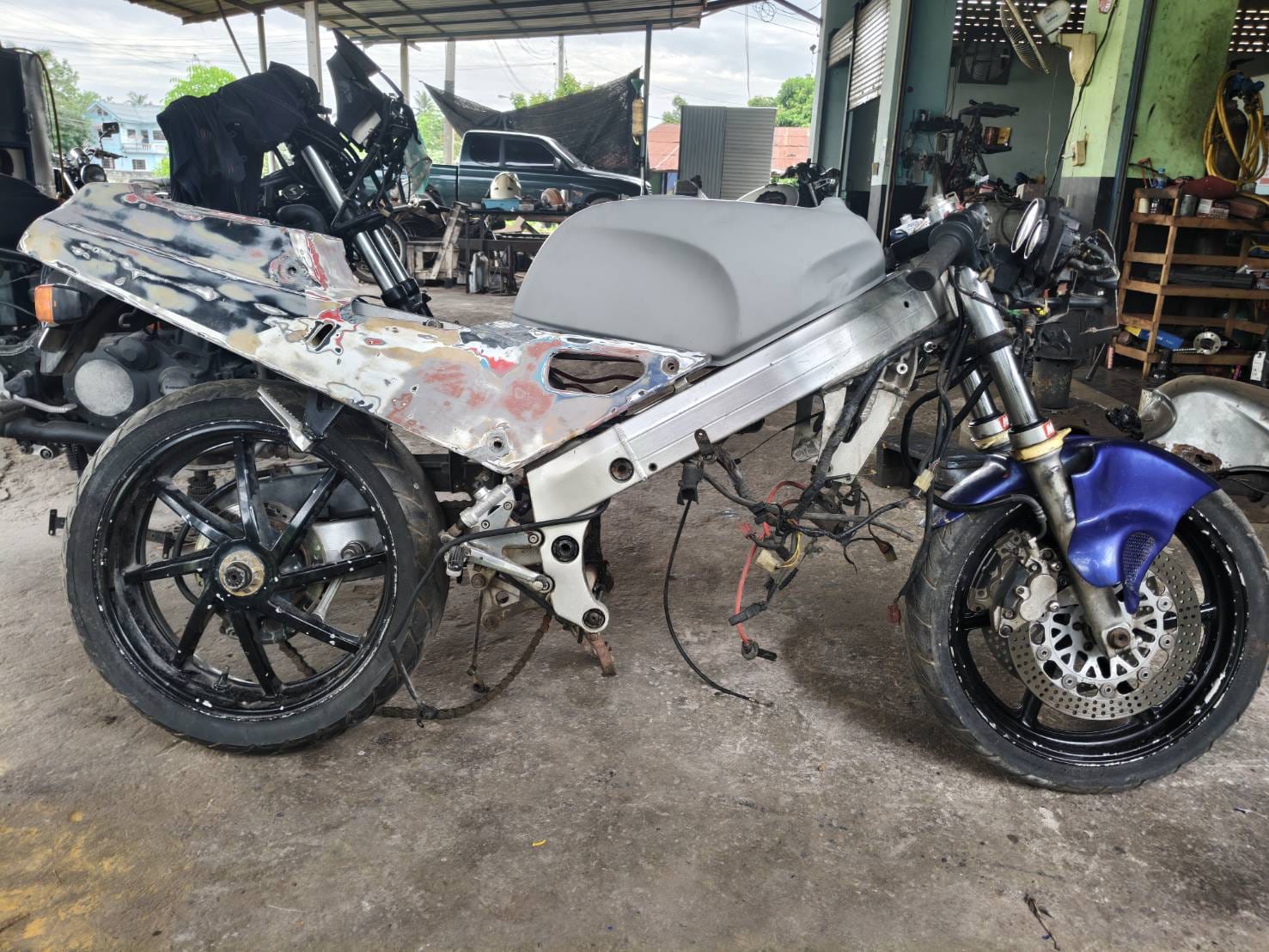
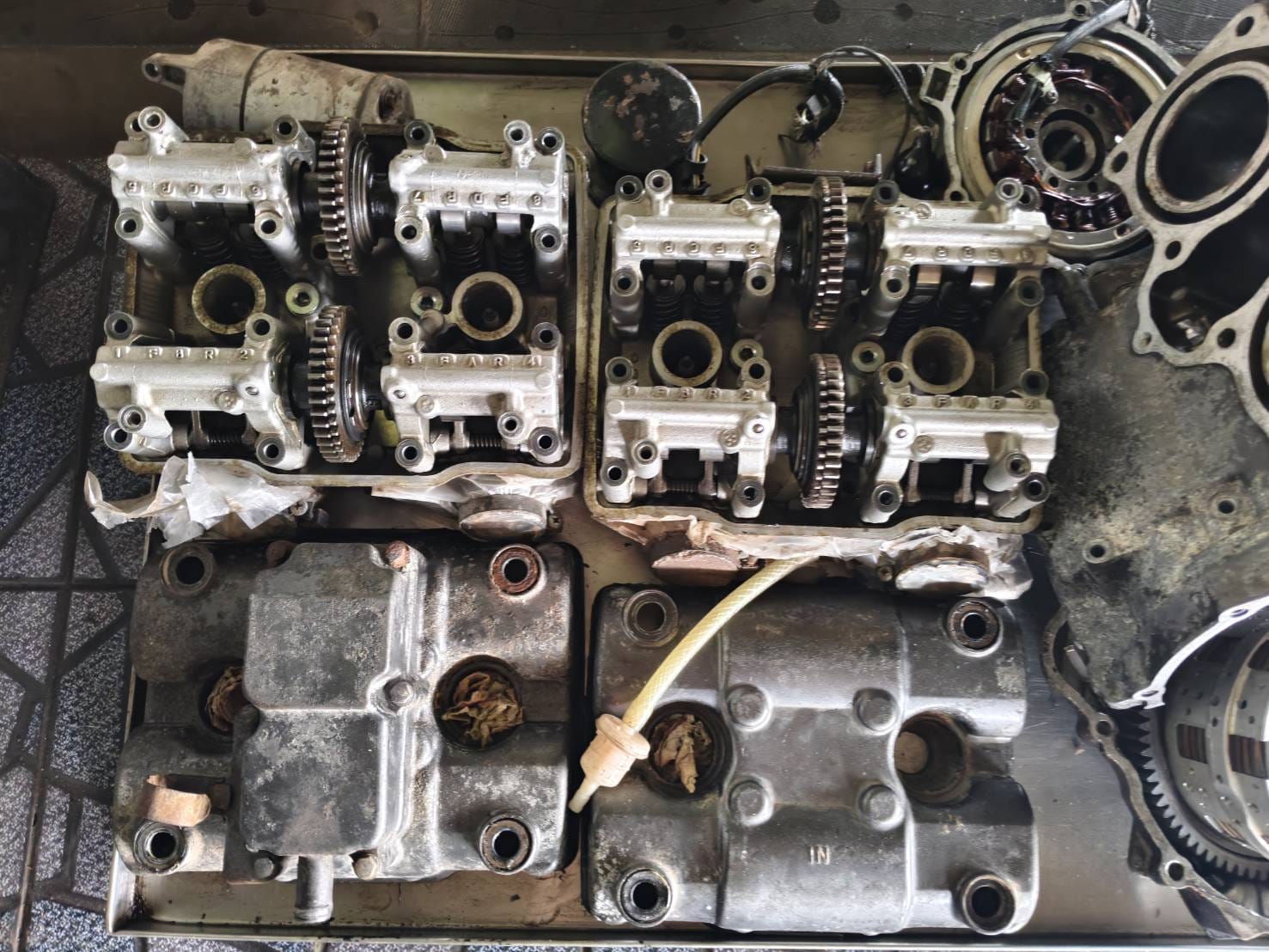
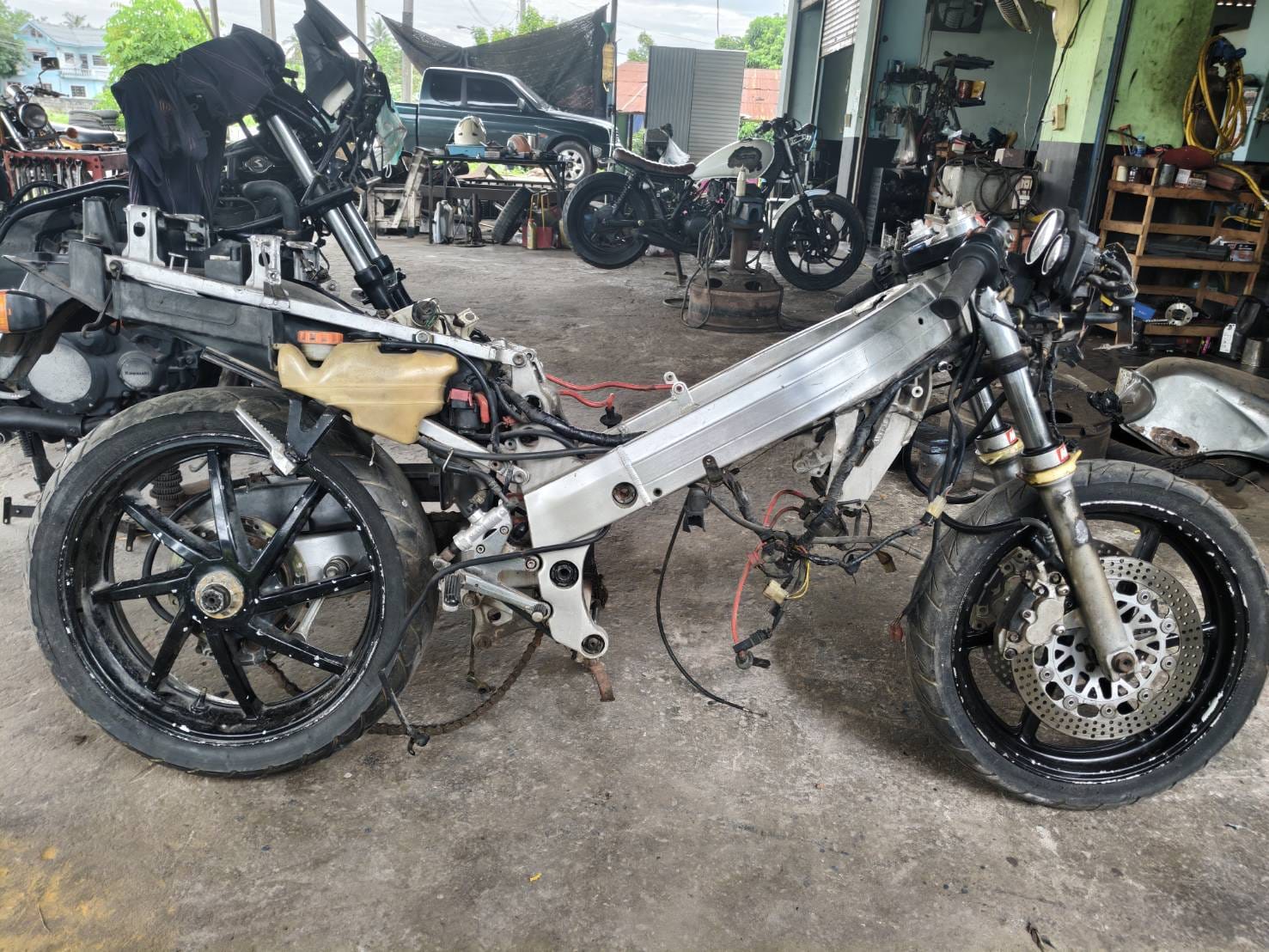
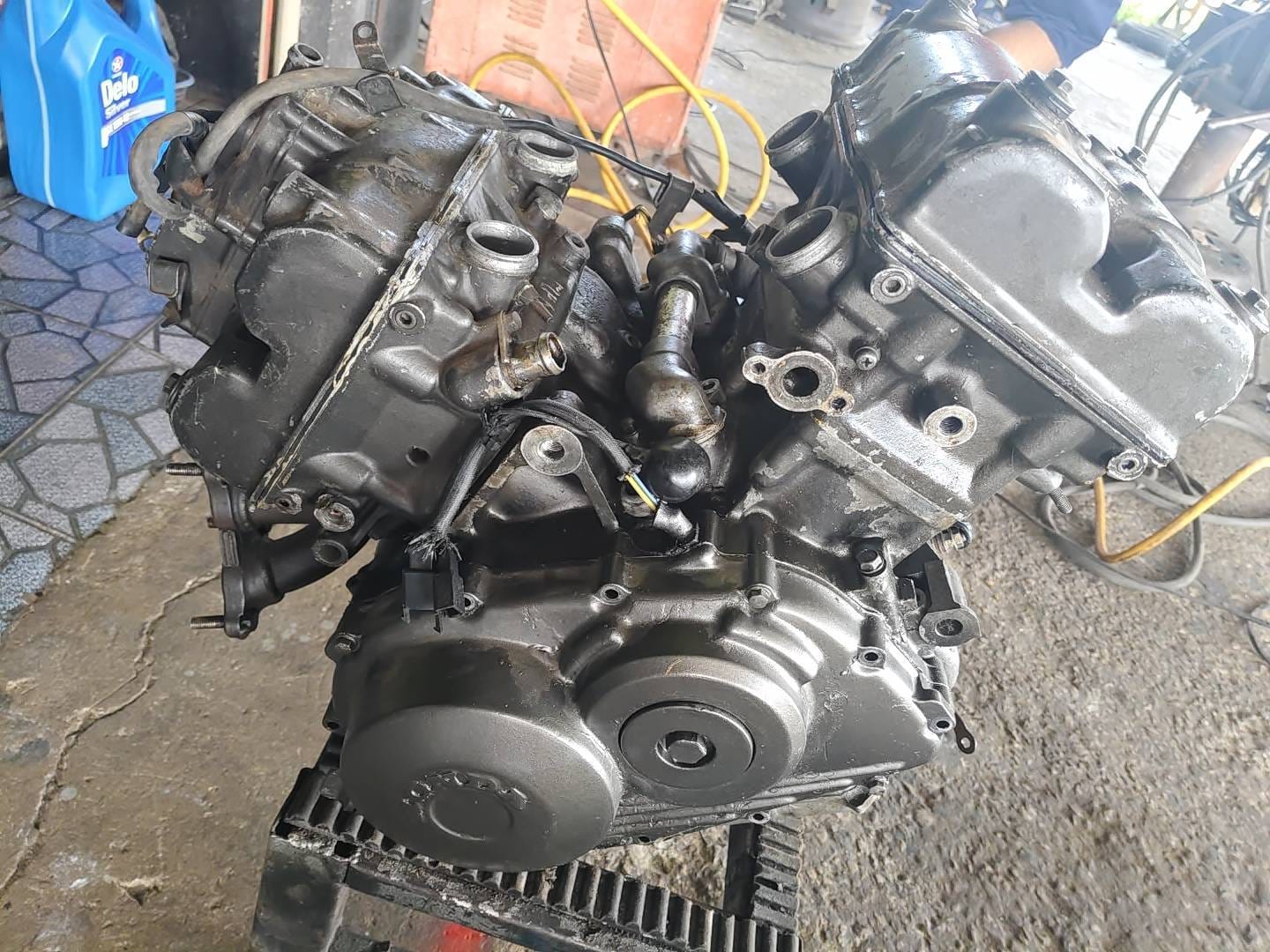
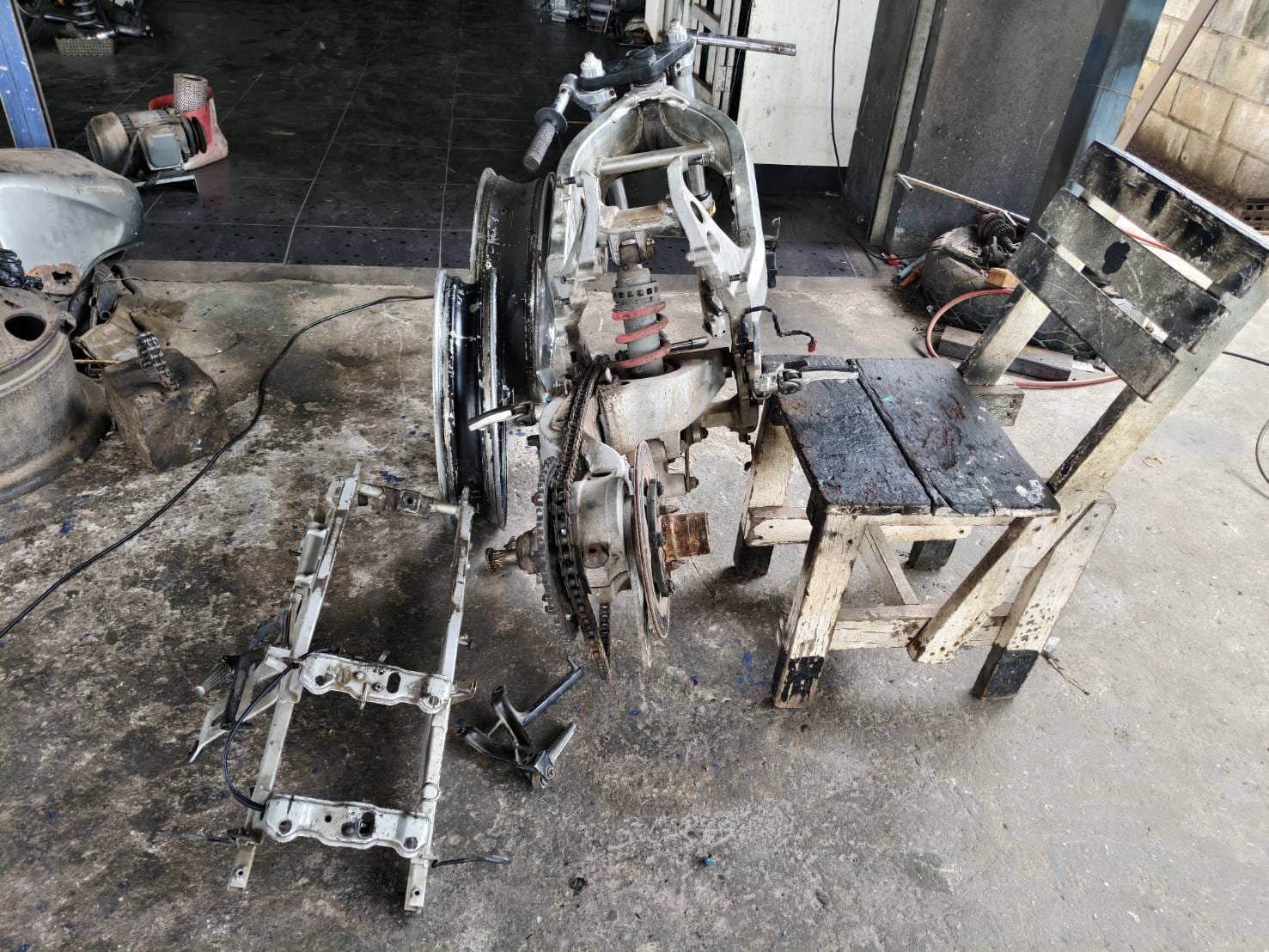
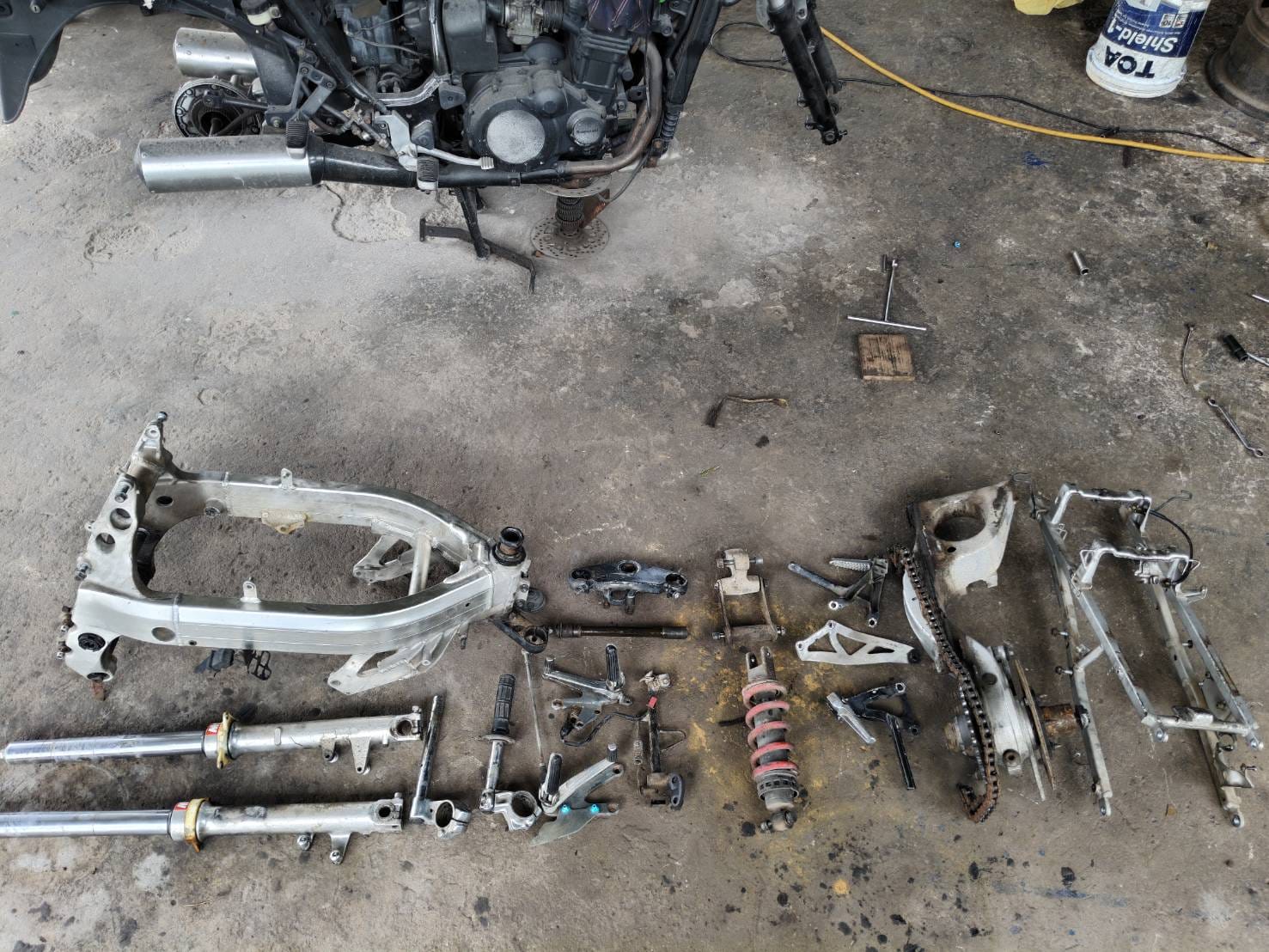
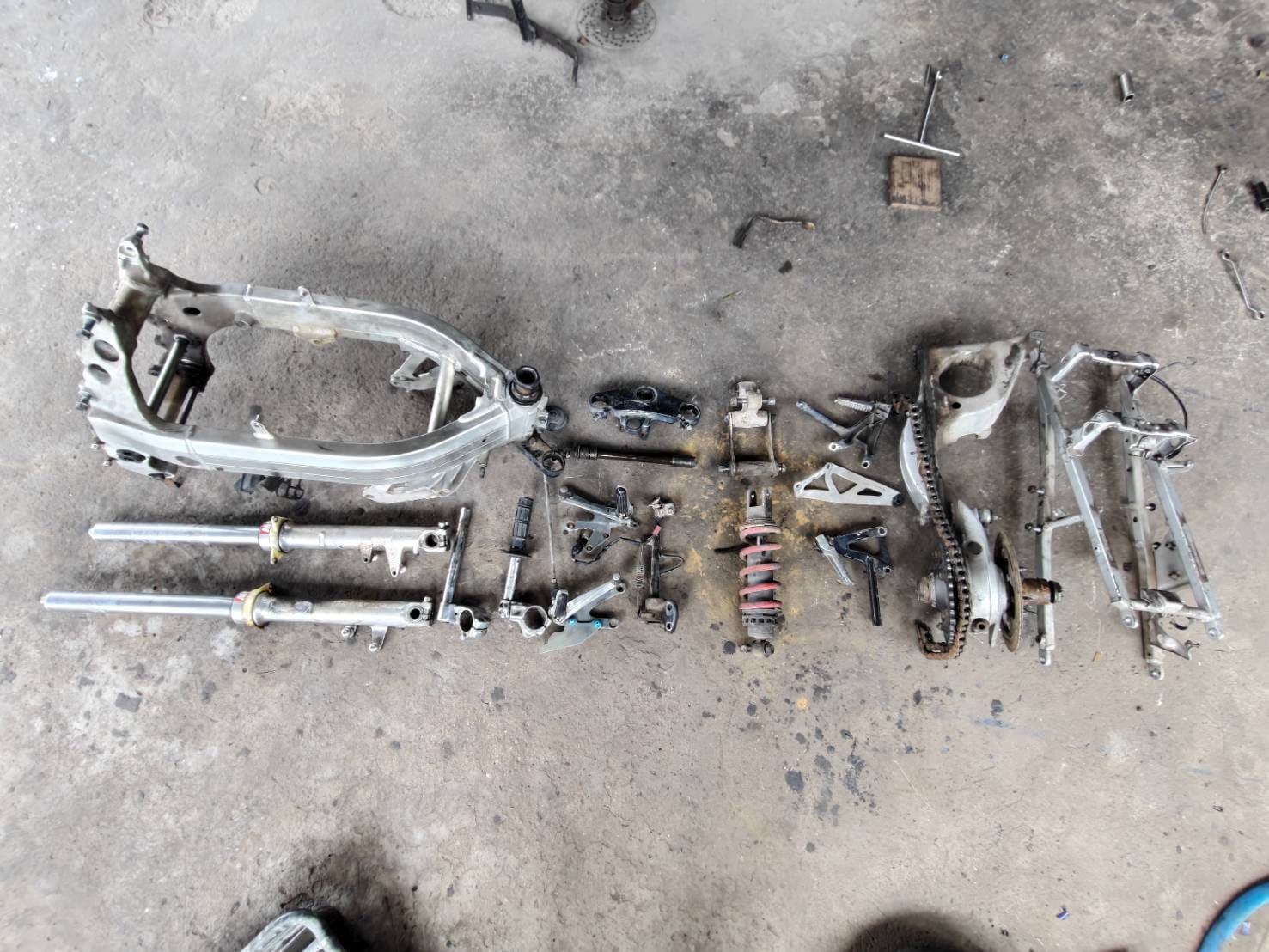
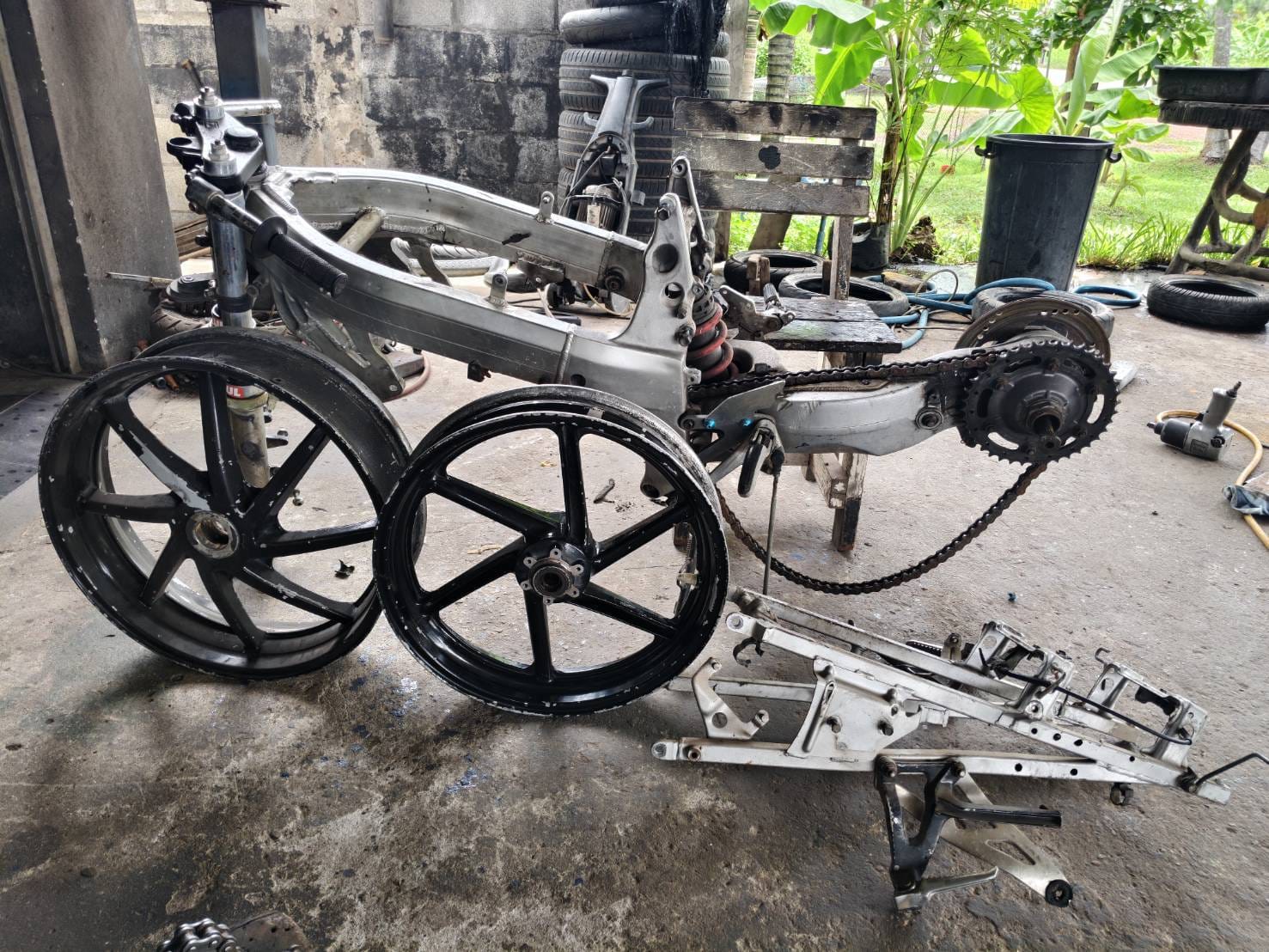
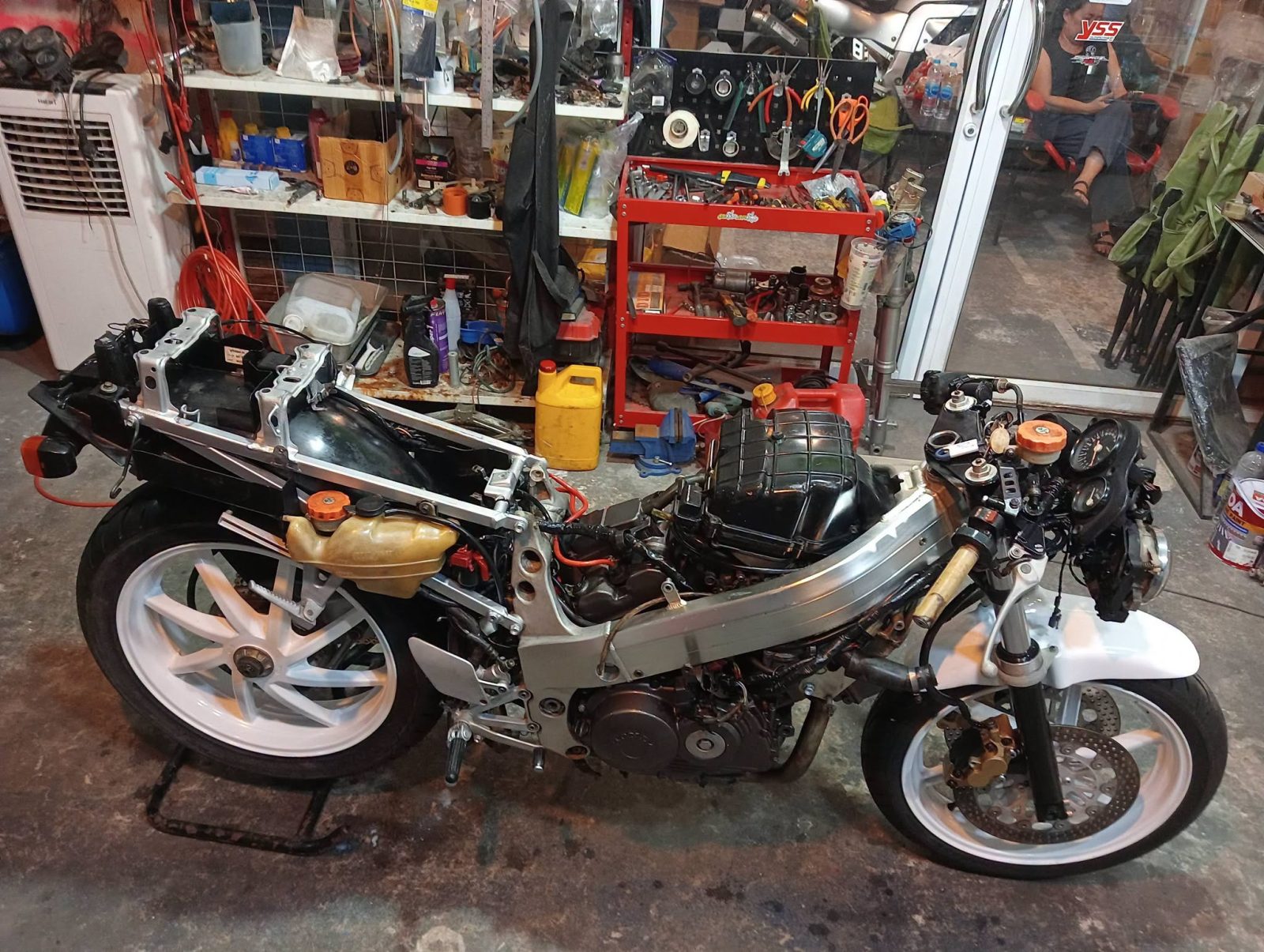
With the engine reduced to a bench full of parts, attention turned to the rolling chassis. The subframe came off first, followed by the swingarm, rear shock, forks and yokes, until the NC30’s aluminium beam frame stood completely bare for the first time in over thirty years.
Then came the part of every teardown that separates a workshop from a shed: the inventory. Every component was laid out, photographed and catalogued — fork legs drawn from their yokes, rearsets and hangers, calipers, the rear hub with its chain and sprocket, and the subframe rails lined up like an exploded diagram brought to life. It’s a strangely satisfying sight: an entire motorcycle, readable at a glance, with nowhere left for problems to hide.
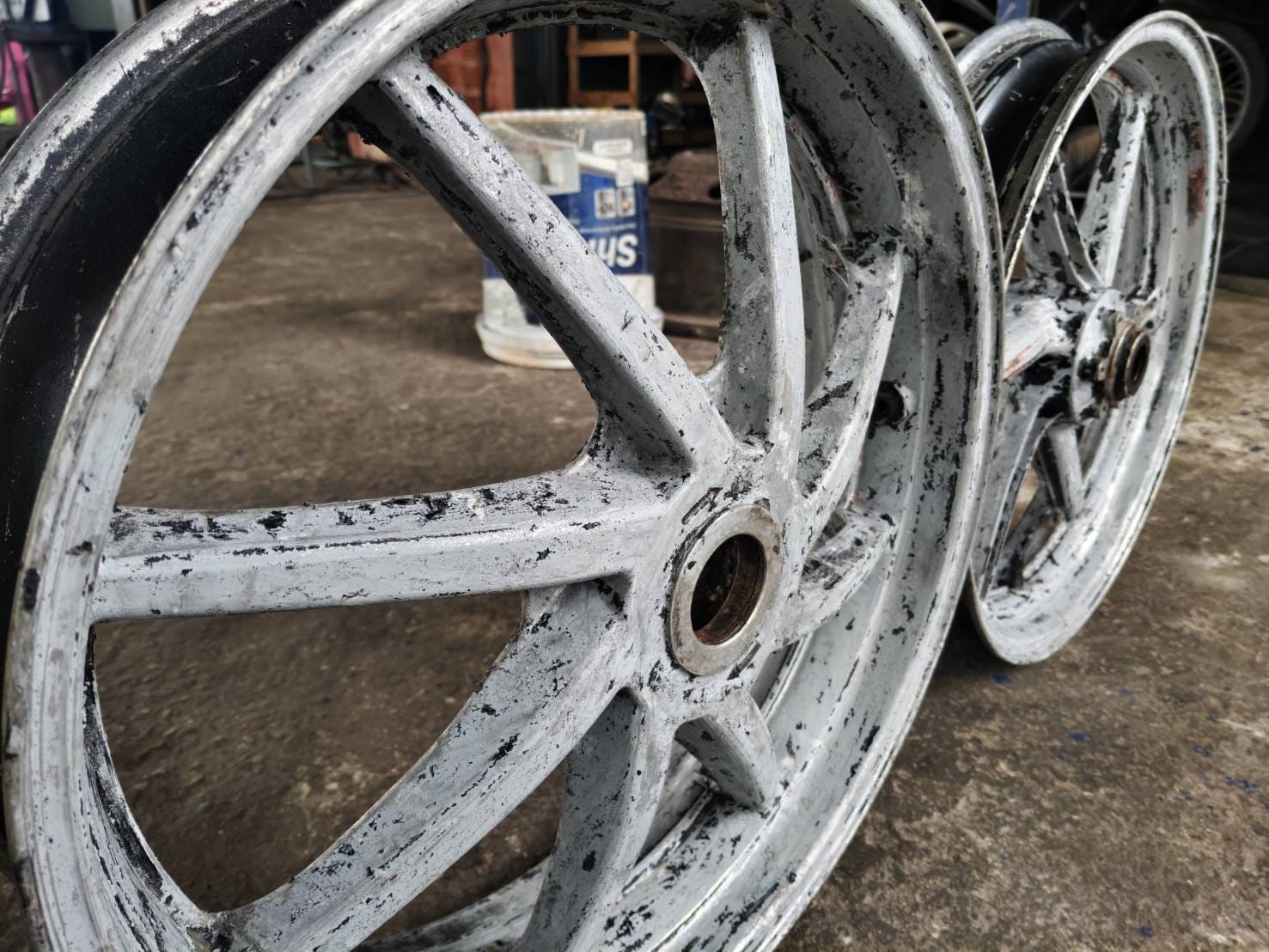
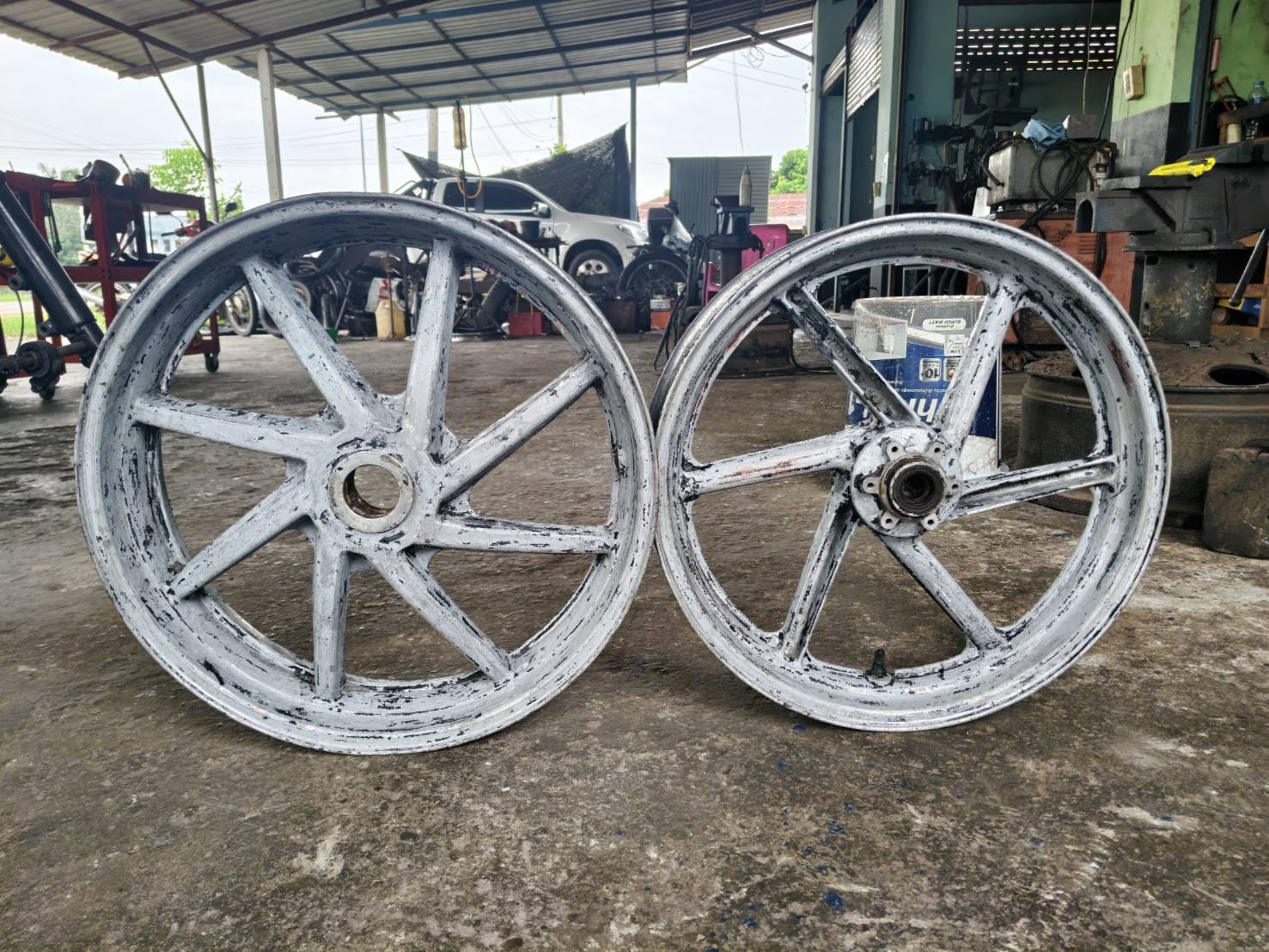
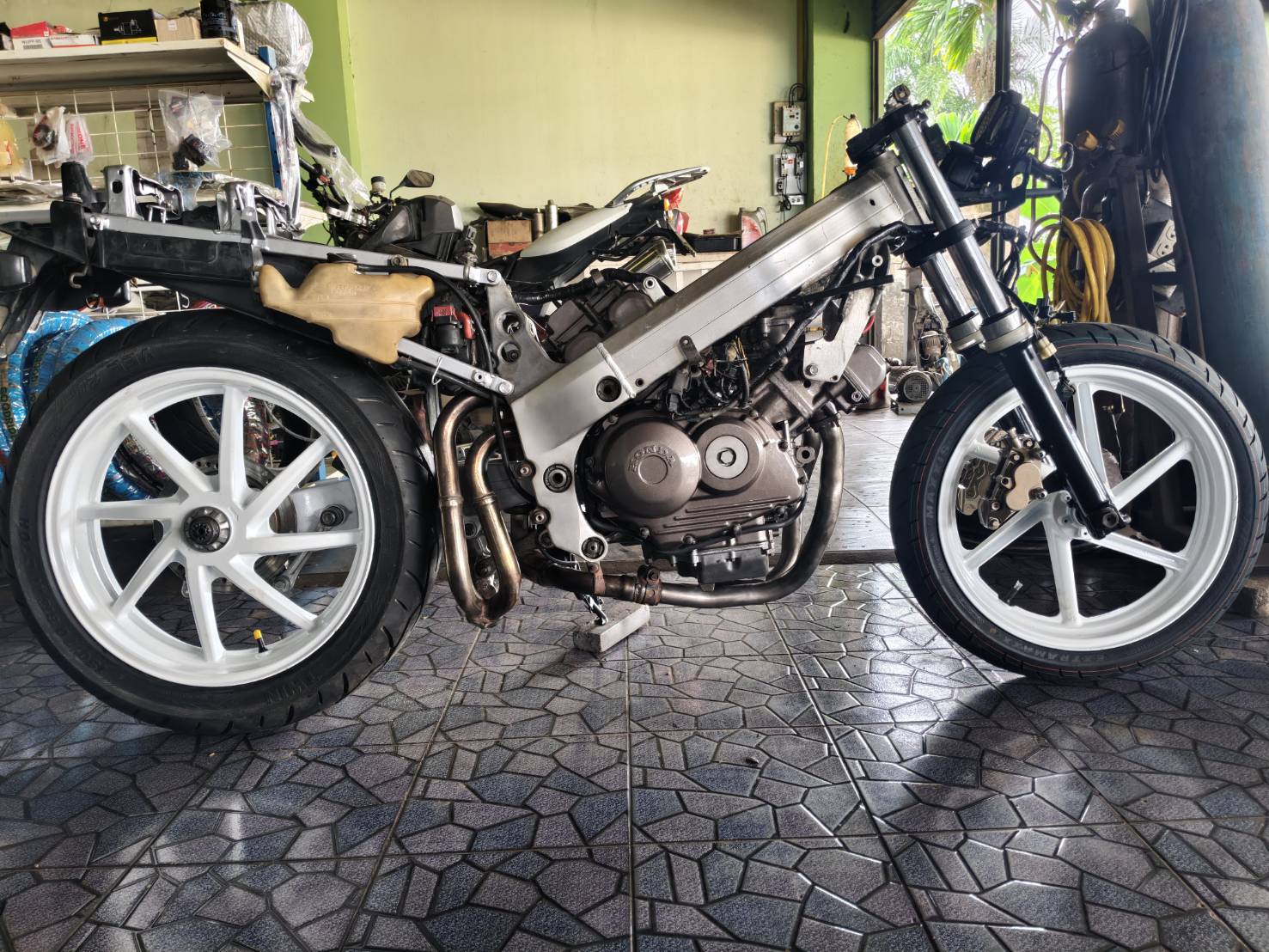
The wheels are first in the refinishing queue. Decades of old paint have been stripped back to bare alloy, revealing castings that are straight, true and worth saving — exactly what you hope to find under thirty years of resprays. With the hubs and bearings exposed and ready for attention, these are the first parts of the NC30 to begin the journey back.
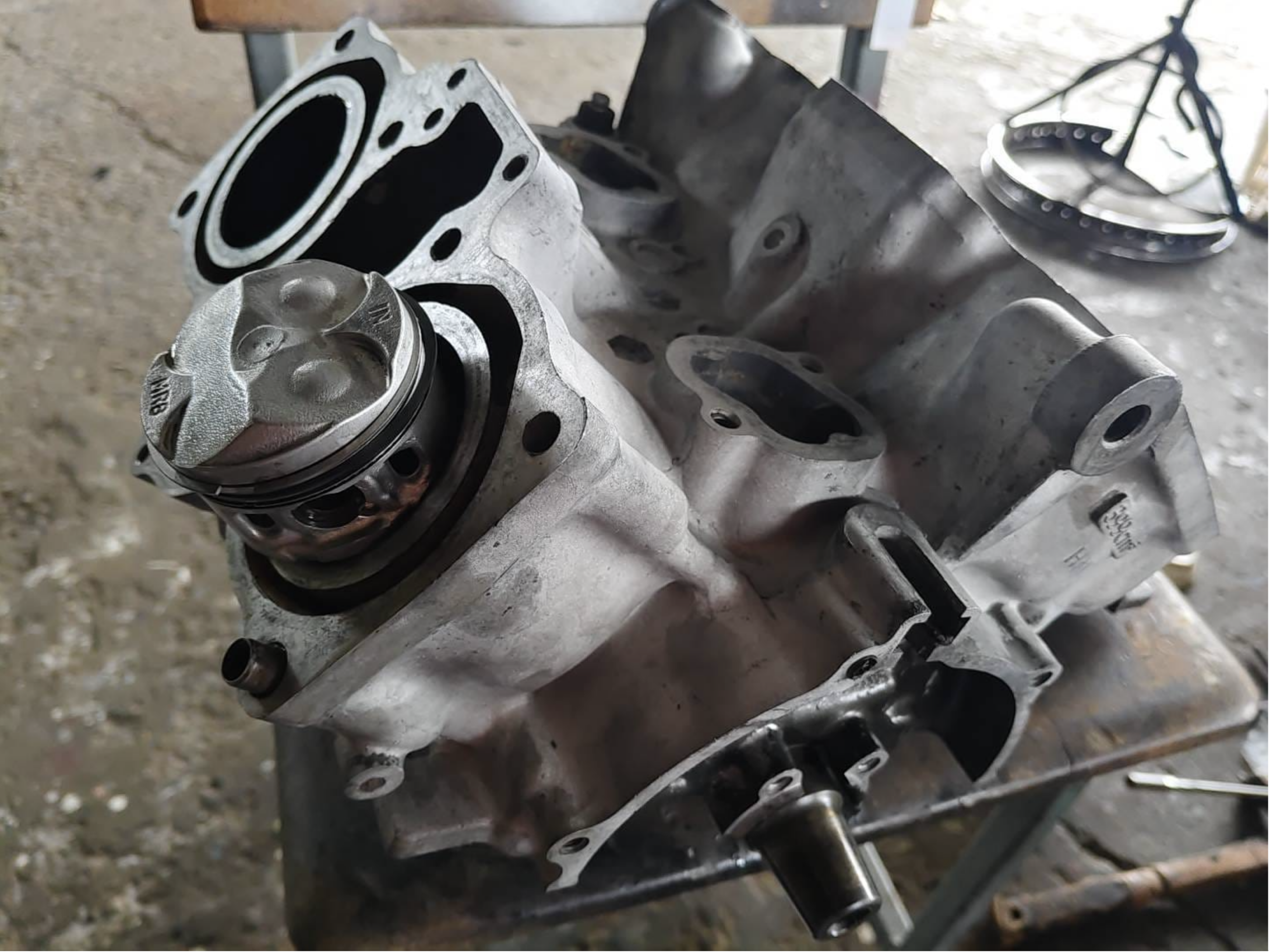
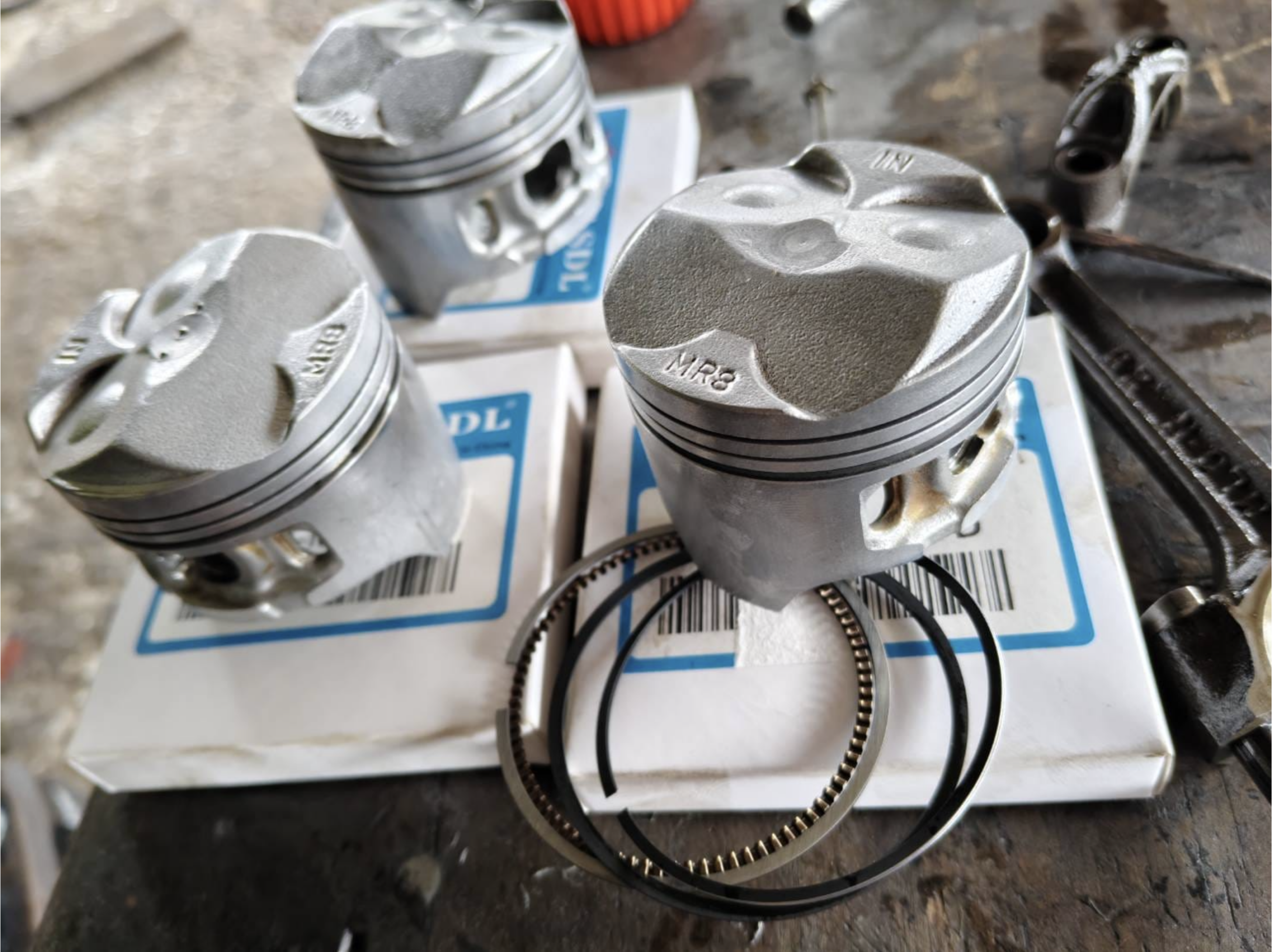
Three weeks of cleaning, inspection and measuring came back with a verdict: the original pistons and rings had given everything they had. Rather than gamble a show-quality rebuild on tired internals, the decision was made for new — a fresh set of pistons and rings, carrying the same MR8 markings as the originals they replace.
With that settled, the bottom end began going back together. The crankshaft was bedded back into its case half, the con-rods laid out in order on the bench, and the cleaned cases prepared for sealing. On the casting, the engine number stamp — NC13E, the code every NC30 carries — is a quiet reminder of exactly what’s being brought back to life here.
A new piston sitting proud at the top of a clean bore is the moment every restoration changes direction. Until now, everything has been coming apart. From here, everything goes back together.
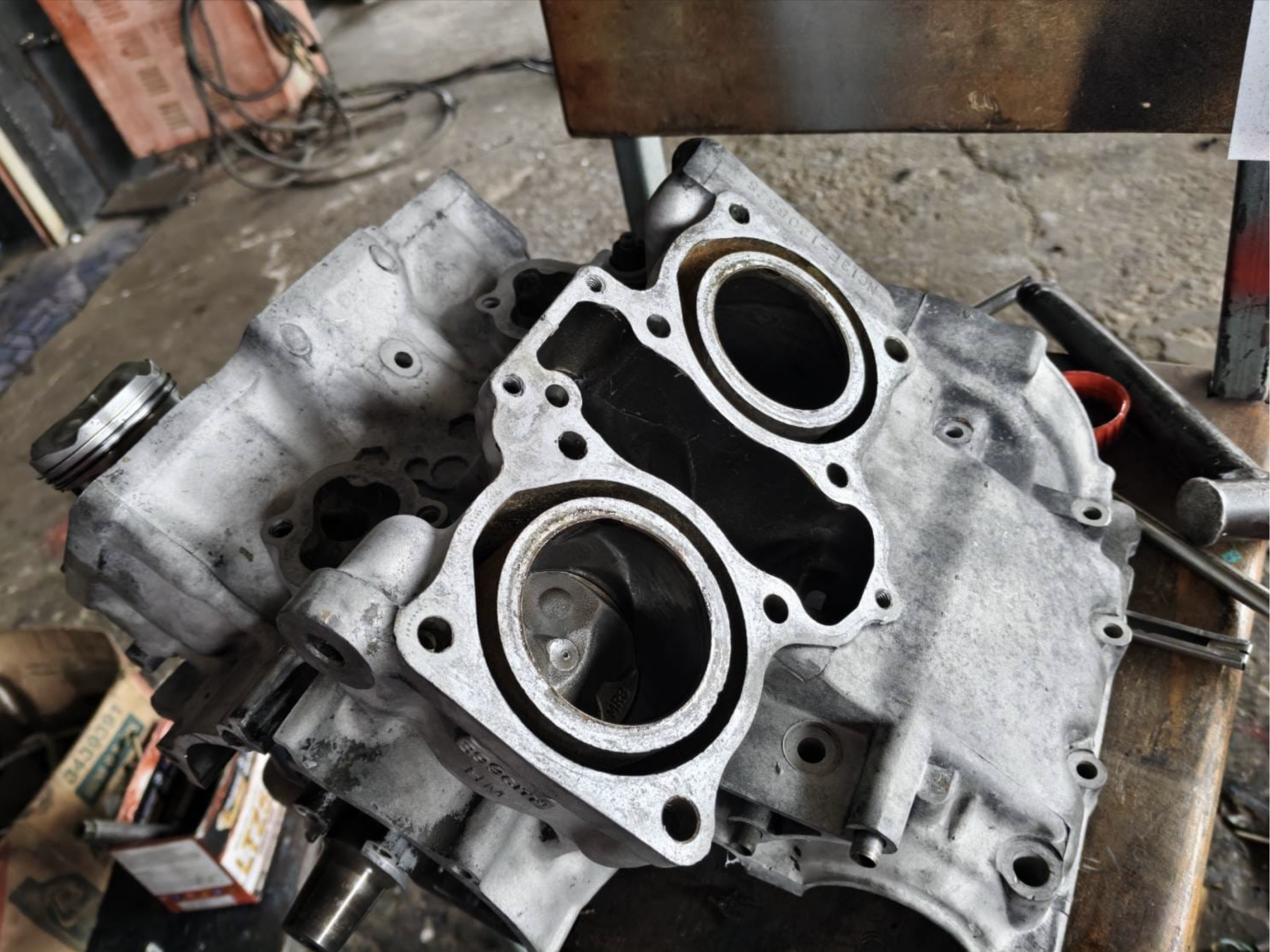
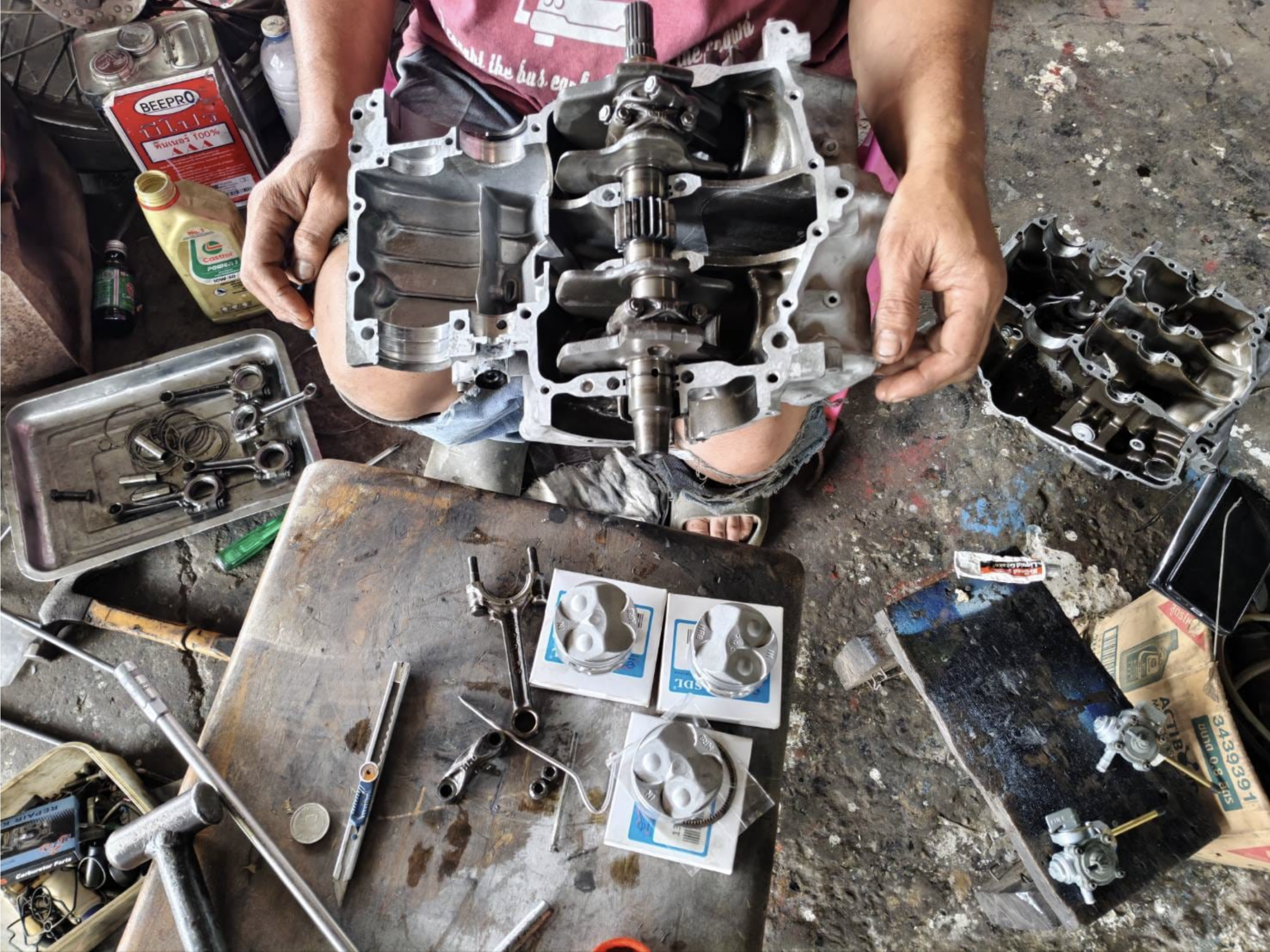
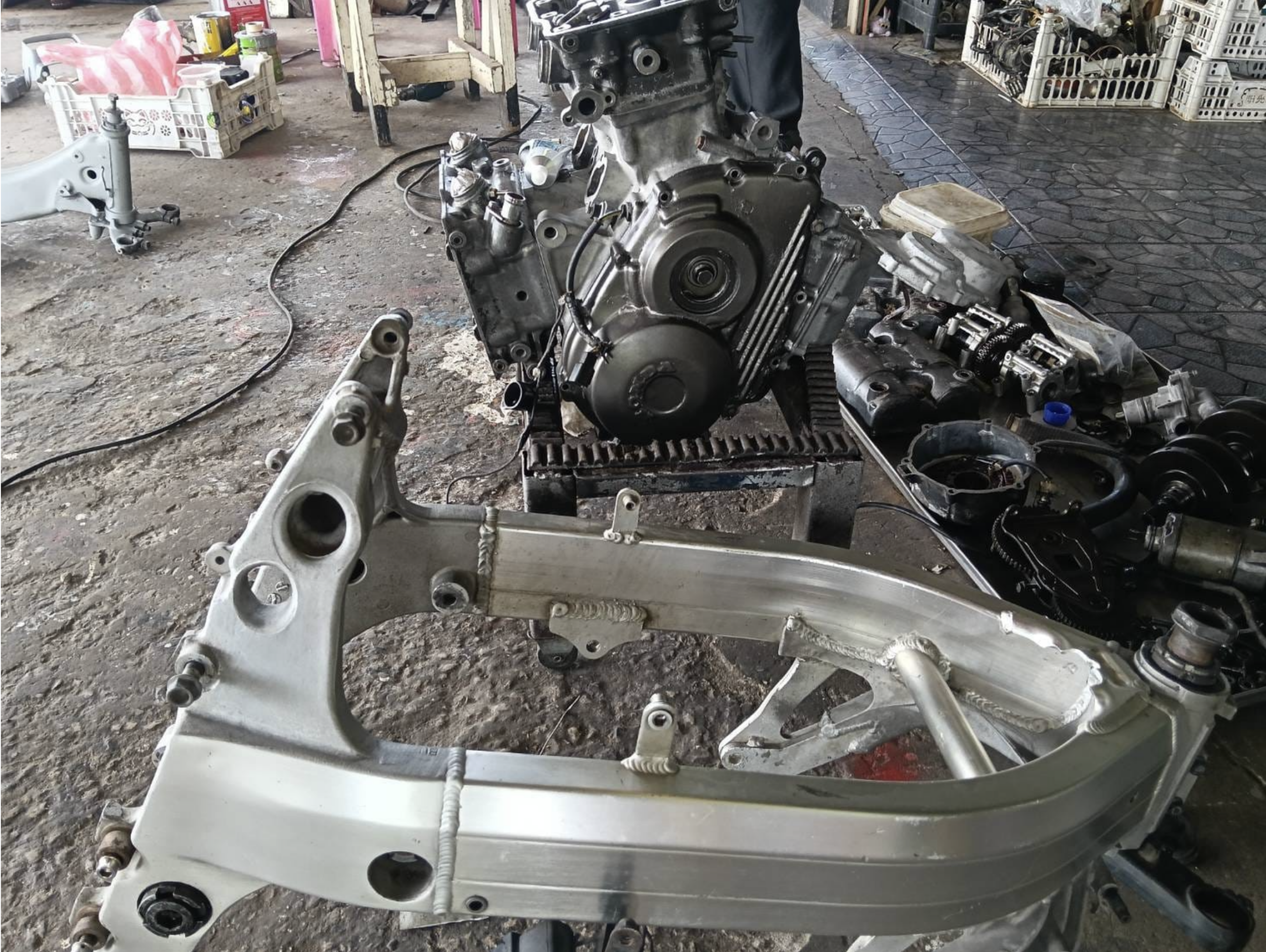
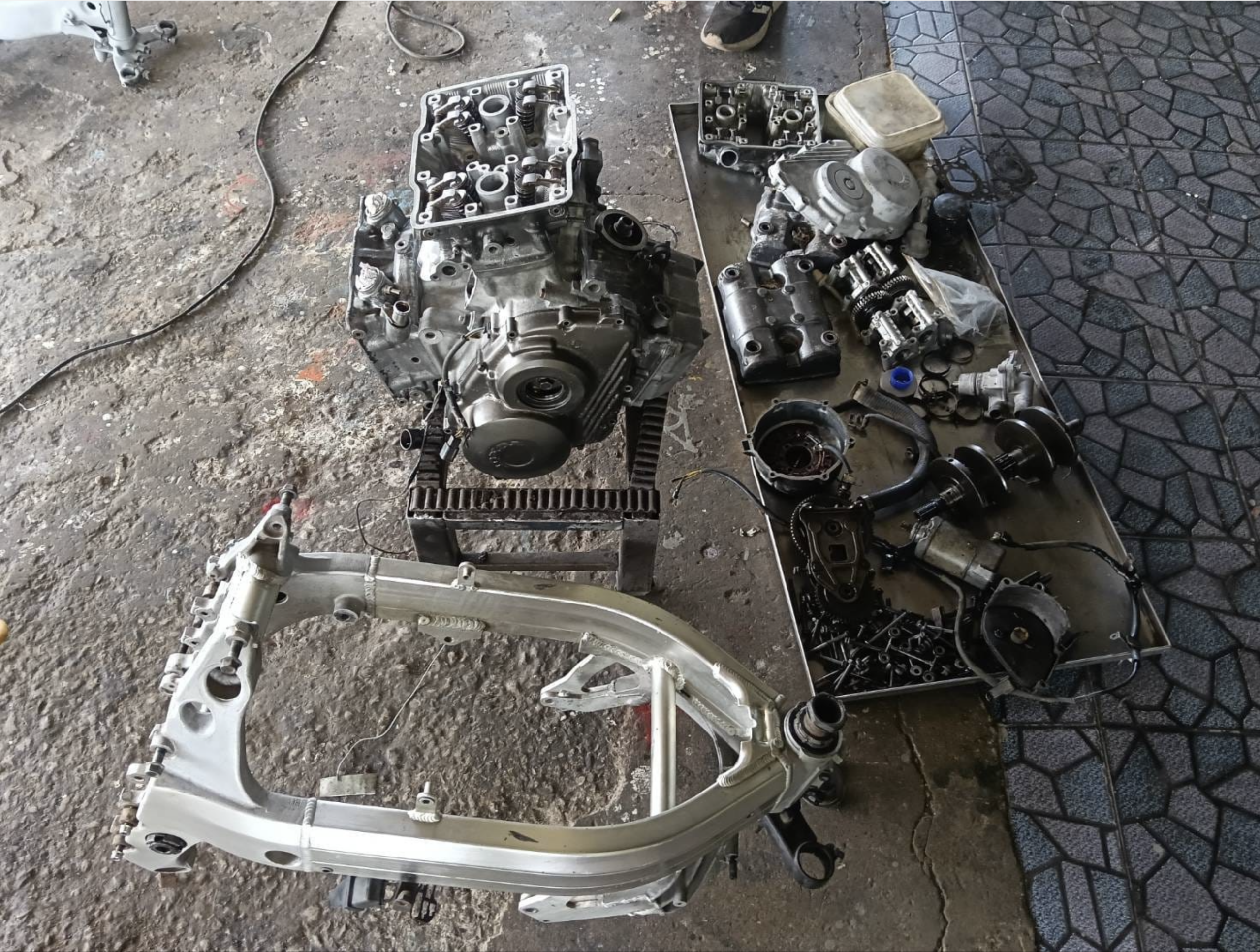
Two days later, the V4 is recognisably an engine again. The crankcases have been sealed — the tube of RTV still sitting on the bench tells its own story — and both rebuilt cylinder heads are back on, valve gear assembled, rockers and springs in place. The open ports are plugged with wadding while work continues: a small detail, but it’s exactly what “no shortcuts” looks like up close.
Around the engine stand, the remaining pieces wait their turn in order — cam carriers, covers, the stator and starter, the water pump, and every fastener cleaned and sorted. Nothing goes on dirty, and nothing goes on out of sequence.
And in the foreground of it all sits the freshly prepped frame — cleaned, bare and ready. For the first time since the teardown began, the engine and the chassis are converging on the same moment: the day the V4 goes back home.
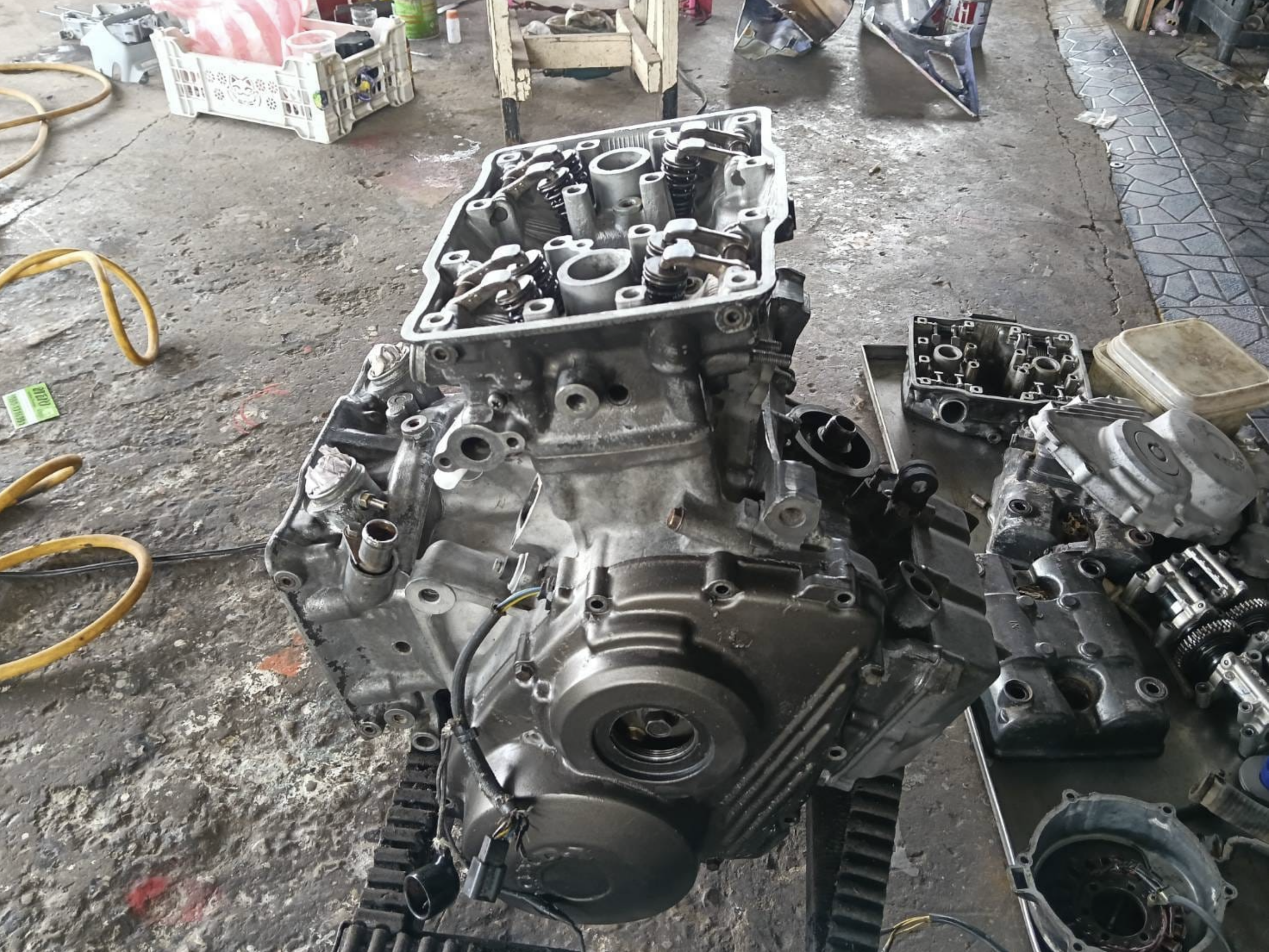
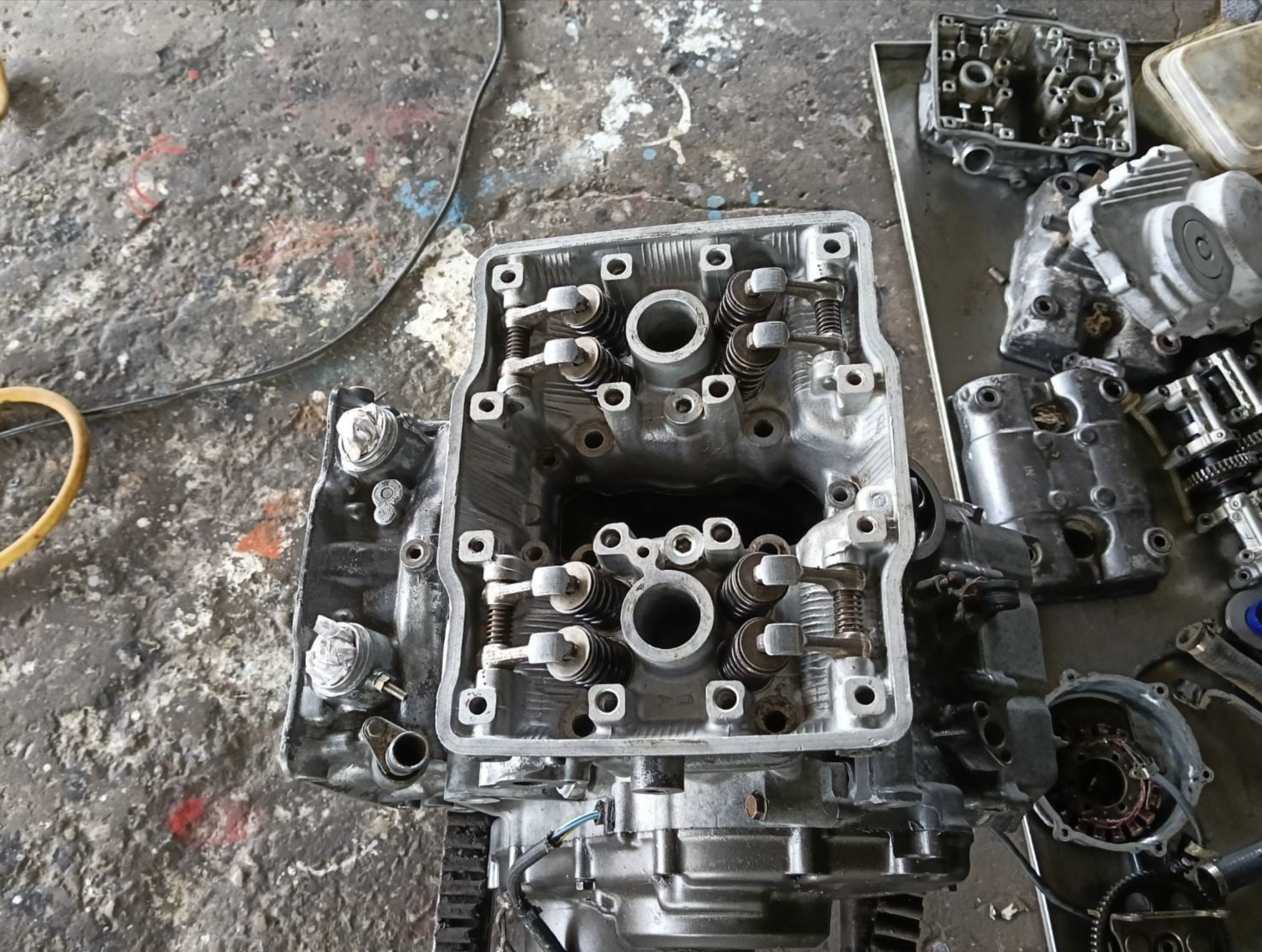
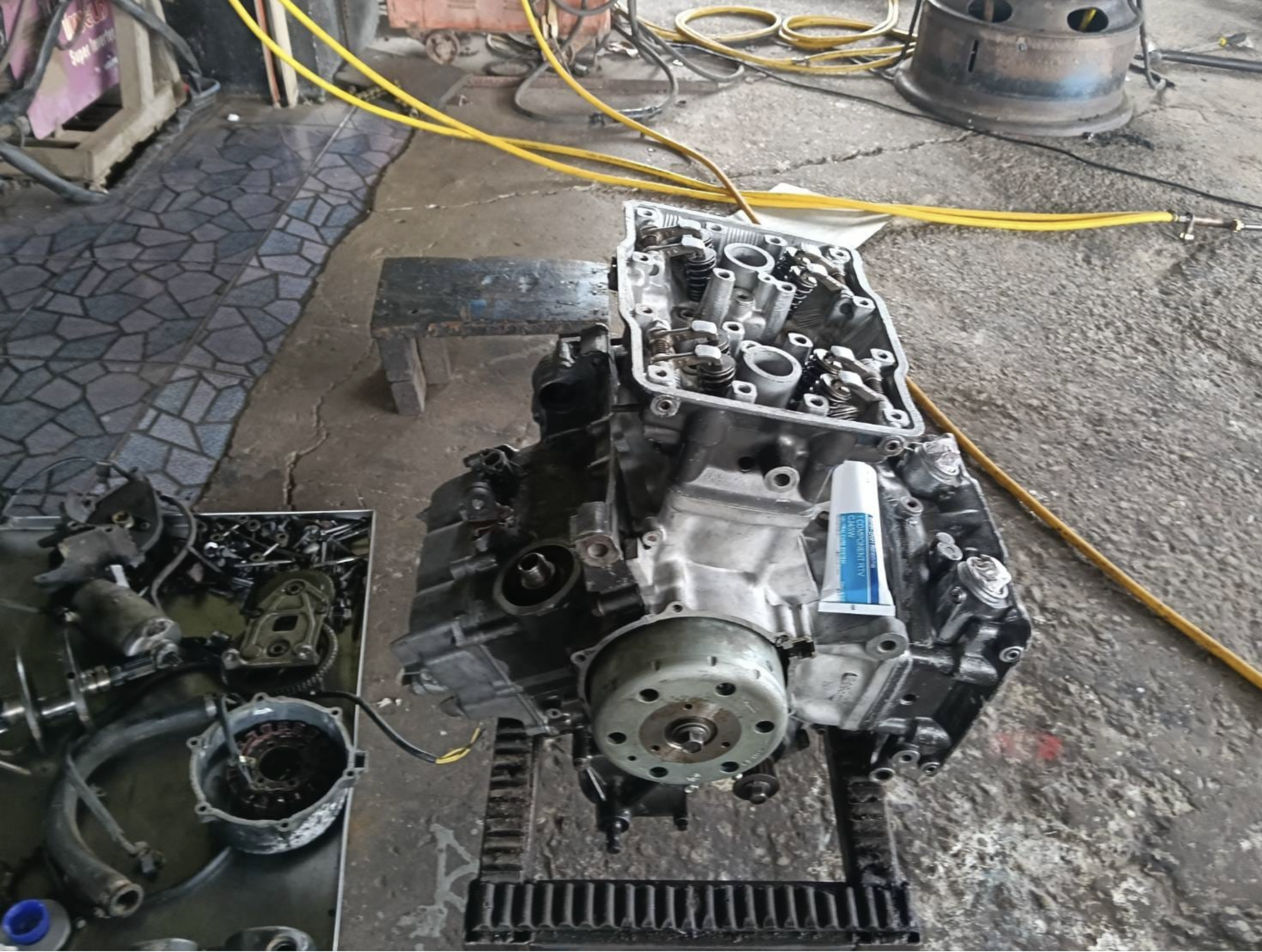
Less than a week after the cases were sealed, the V4 stands finished. Built up complete on the stand — cam gear in, covers on, the castings cleaned back and refinished — it looks less like a thirty-year-old engine and more like something Honda just shipped. Weeks of measuring, cataloguing and careful assembly, all invisible now beneath one handsome piece of engineering.
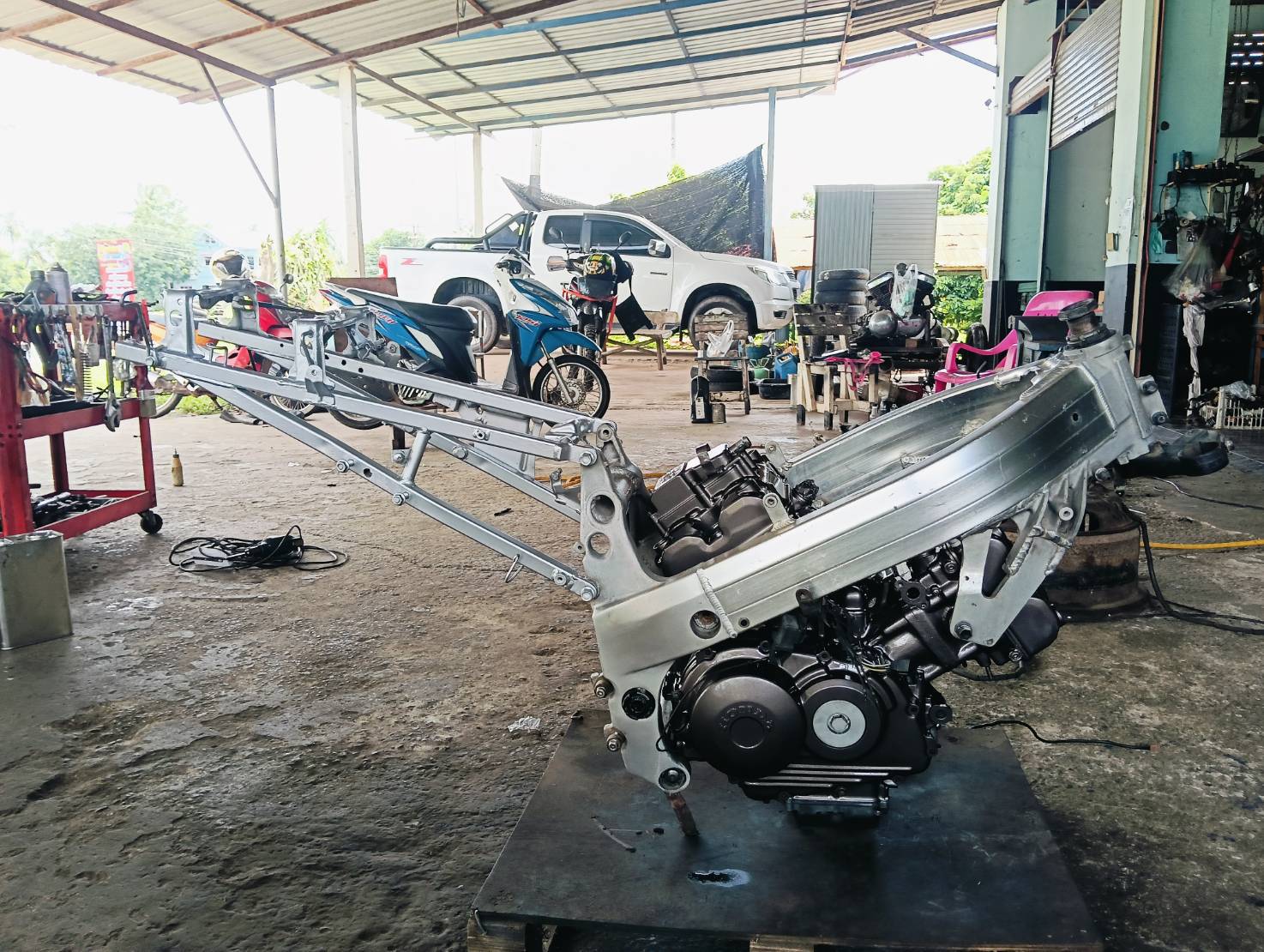
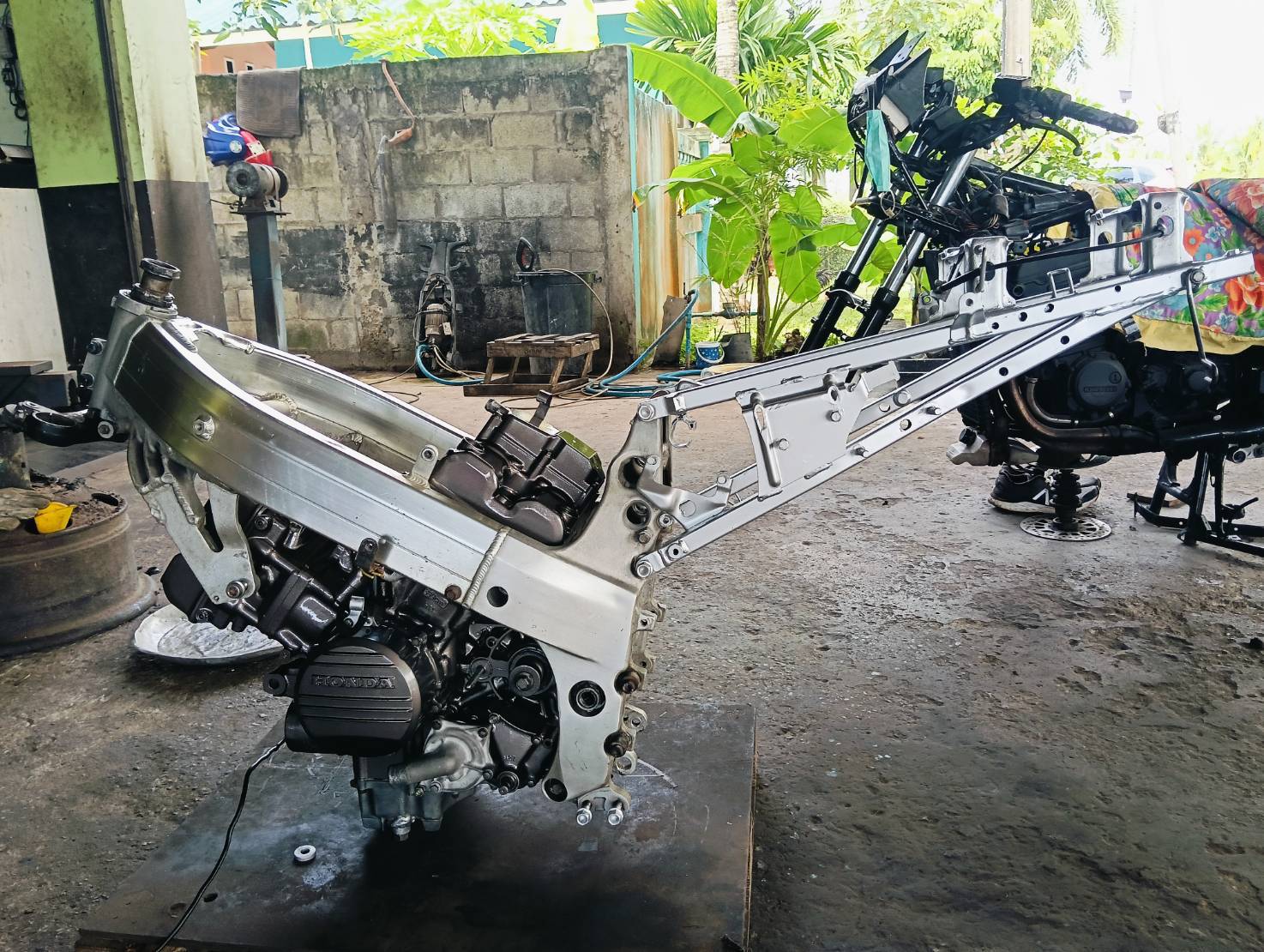
And then, the moment every stage of this rebuild has been pointing at: the V4 went home. Lowered back into the polished aluminium beam frame, the rear subframe bolted up behind it — engine and chassis together again for the first time since the teardown. Three weeks ago this was a bare frame on one side of the workshop and a tray of parts on the other. Today it is, unmistakably, a motorcycle taking shape.
From here, the rolling chassis grows back around the engine — swingarm, suspension, the refinished wheels, brakes and wiring. Everything so far has been about earning this moment. The progress from here is the reward for the patience spent beneath the surface.
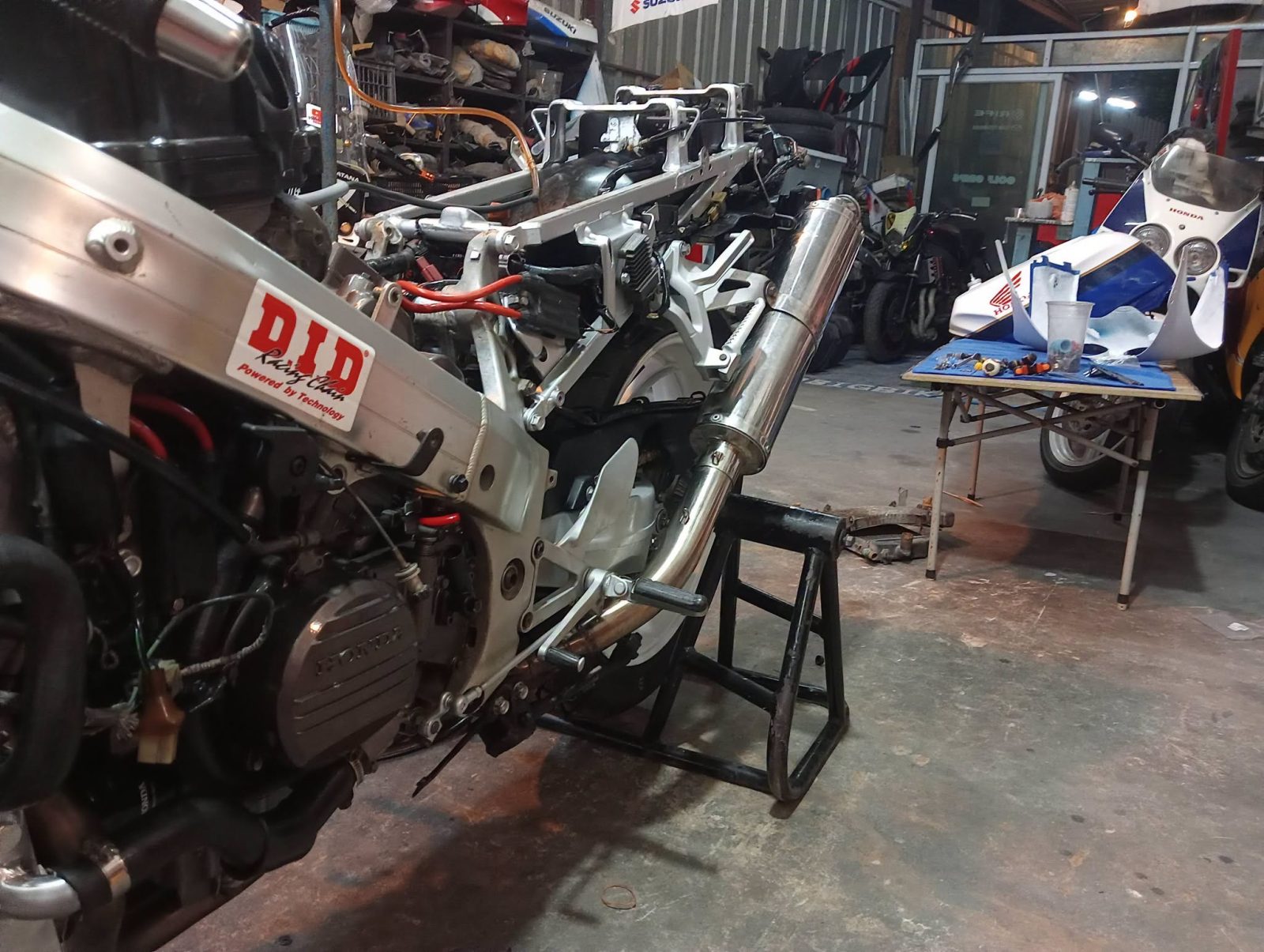
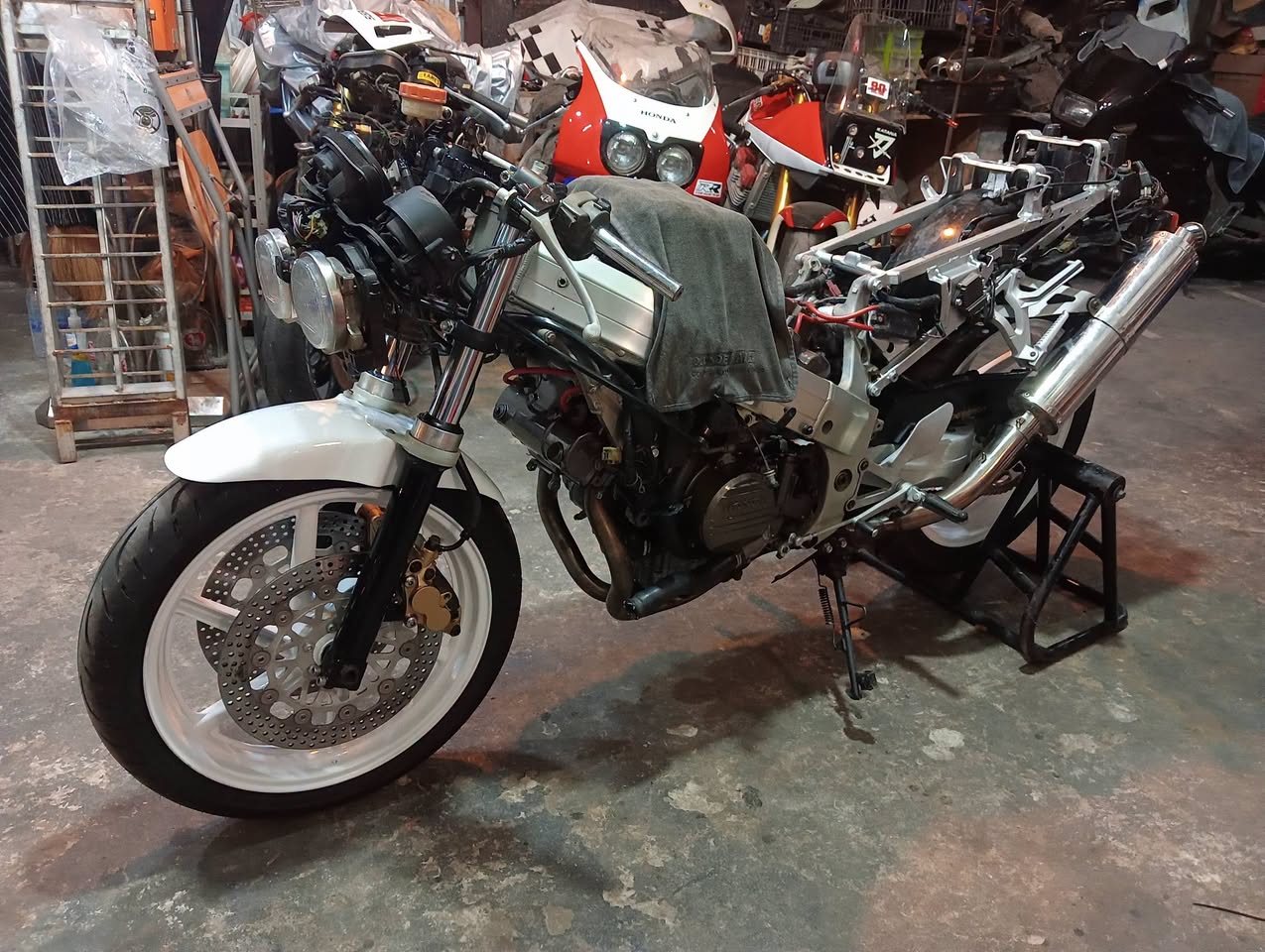
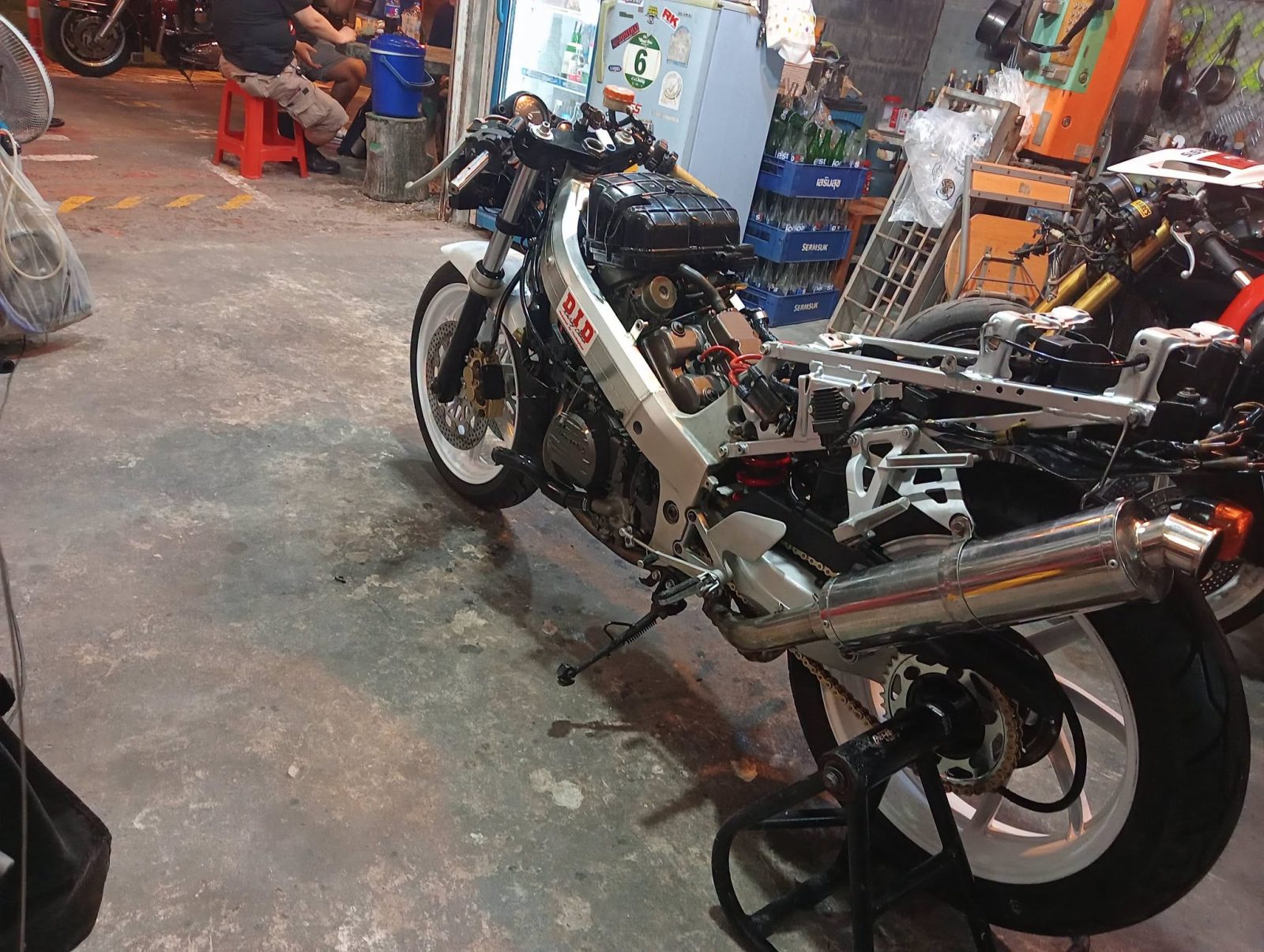
The pace has picked up, and it shows. The swingarm and rear suspension are back in, the refinished wheels are wearing fresh rubber at both ends, the rebuilt brakes are on, and the exhaust downpipes sweep out beneath the V4. For the first time since the teardown began, this rolls on its own two wheels — not a frame, not a project on a bench, but a motorcycle.
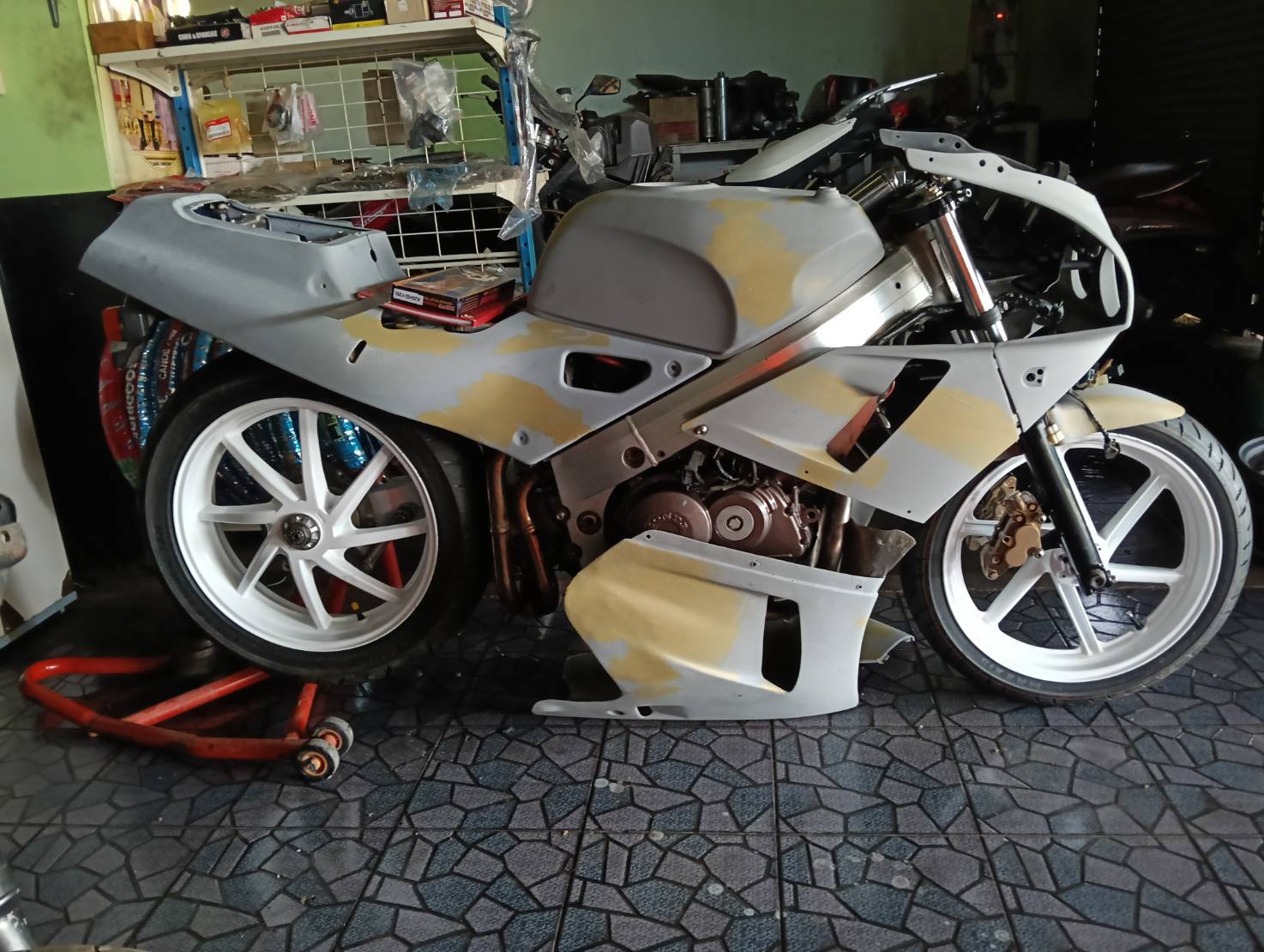
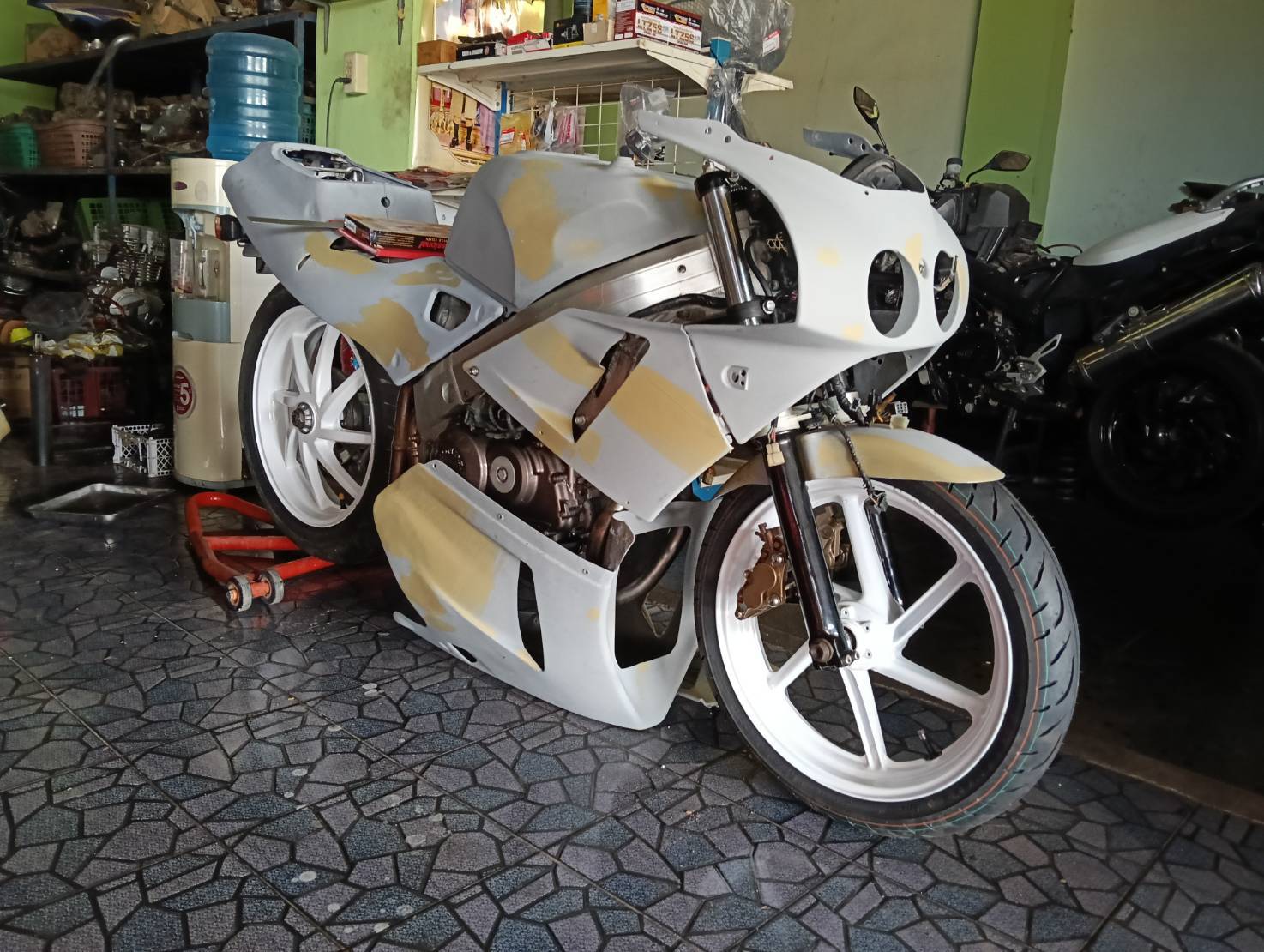
And then the moment that makes the whole page worth scrolling: the complete bodywork, test-fitted in primer. Tank cover, seat unit, fairings, belly pan and that unmistakable twin-headlight nose — every panel hung, aligned and sitting right, the filler beneath the grey still mapping the repairs from the very first week. Thirty years fall away in one look. This is the shape Steve watched disappear through the twisties near The Fish — standing in the workshop, waiting for him.
Primer grey is the quiet stage before the loud one. With the panels fitted and the gaps set, what comes next is the part everyone has been waiting for: colour. The tricolour is coming.
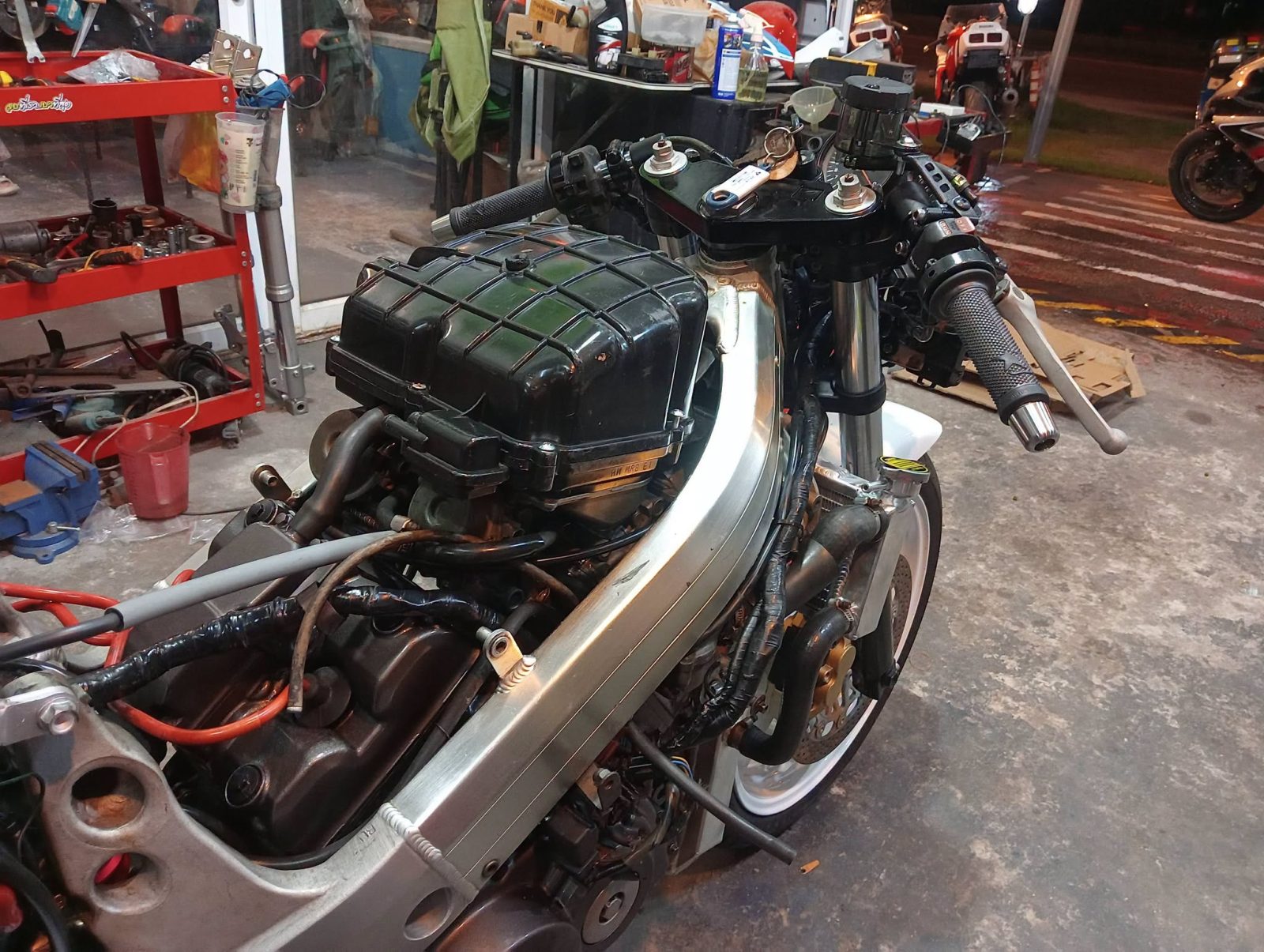
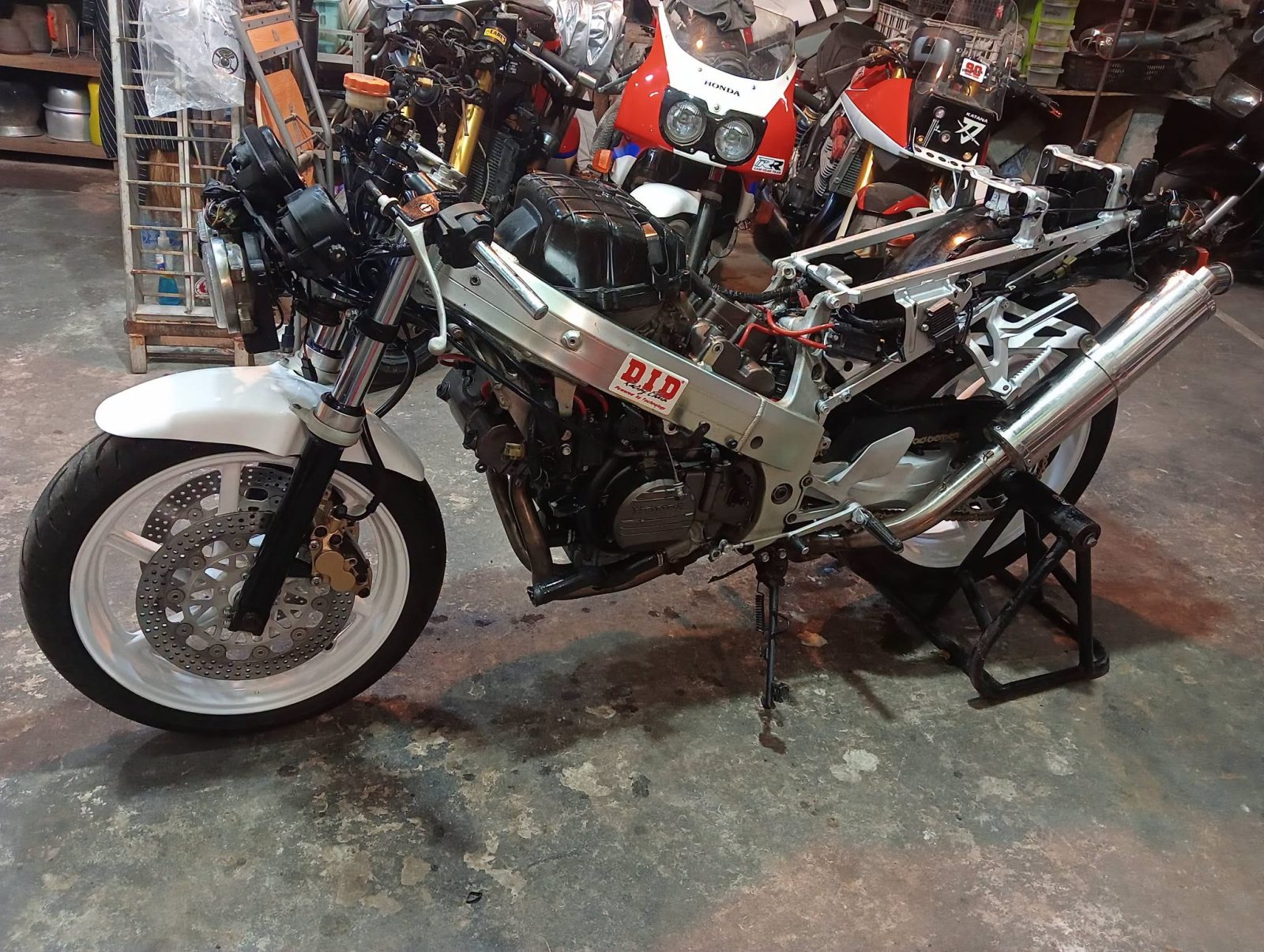
With the primer test-fit done, the panels came back off and the real plumbing began. The V4 can breathe again — the carburettors and airbox are seated between the frame spars, the ignition coils are mounted with fresh leads, and the main loom that will carry every signal on the bike has been routed along the spine of the frame the way Honda intended.
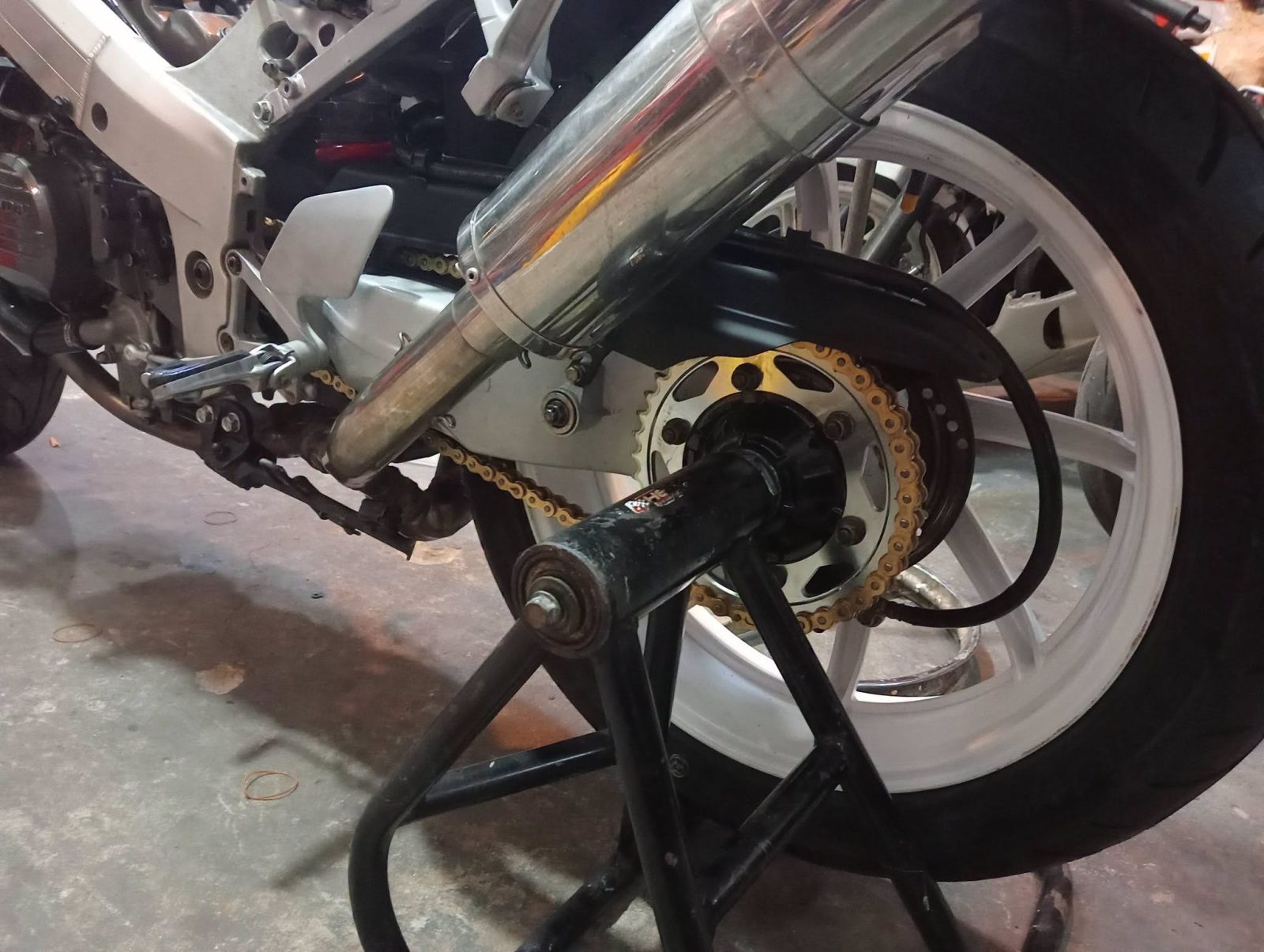
The details pile up quickly at this stage. The instruments are back on the bars, the twin headlights are wired in and hung at the nose, the cooling system is plumbed back in, a polished exhaust sweeps up to the right, and a fresh gold chain turns on a new sprocket — the last link, literally, between the rebuilt engine and the road.
Stand back and it’s no longer a rolling chassis wearing borrowed clothes. It’s a complete, working motorcycle waiting on two things: the first turn of the key, and the paint. Both are close now. The tricolour is coming.
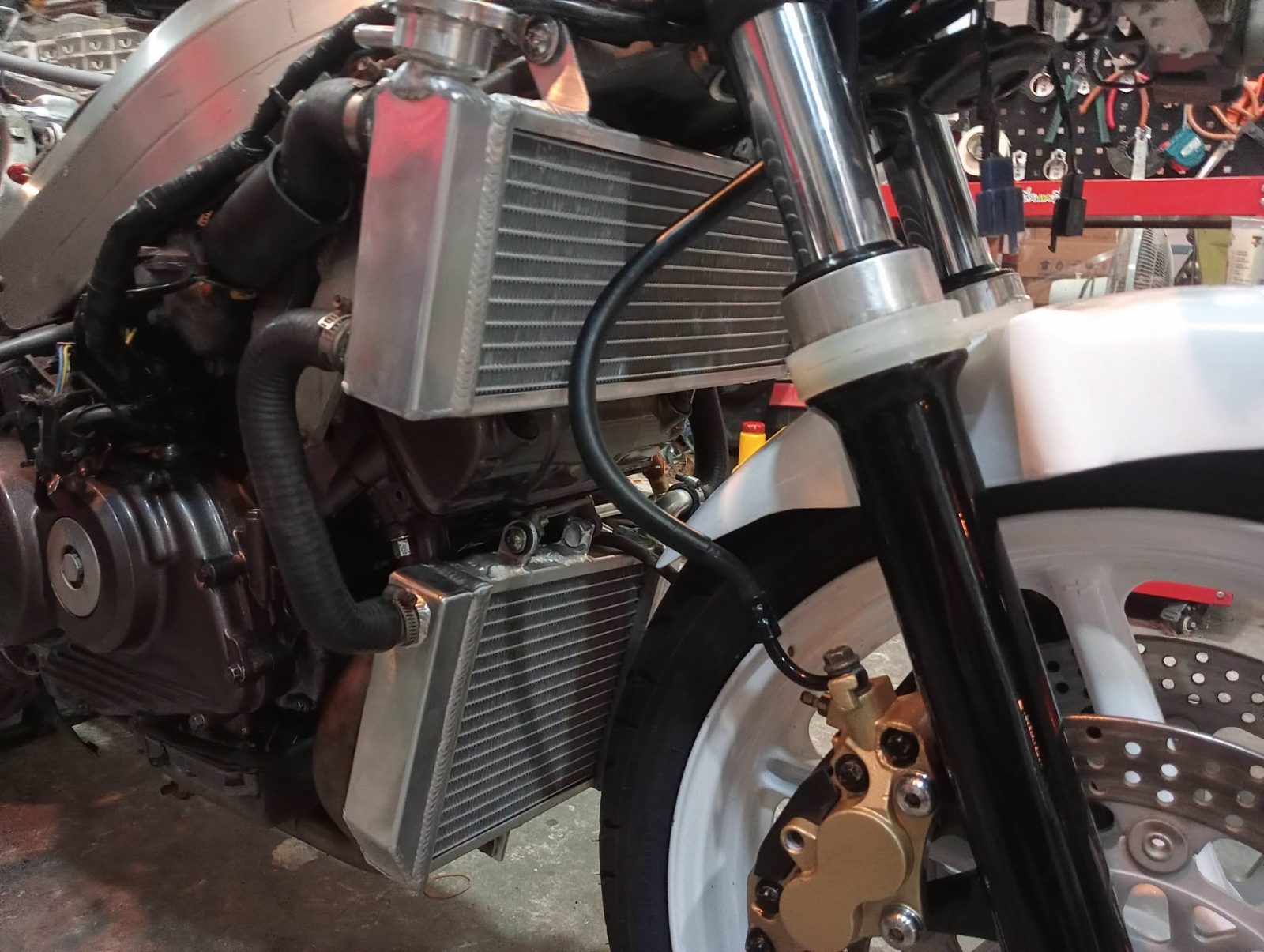
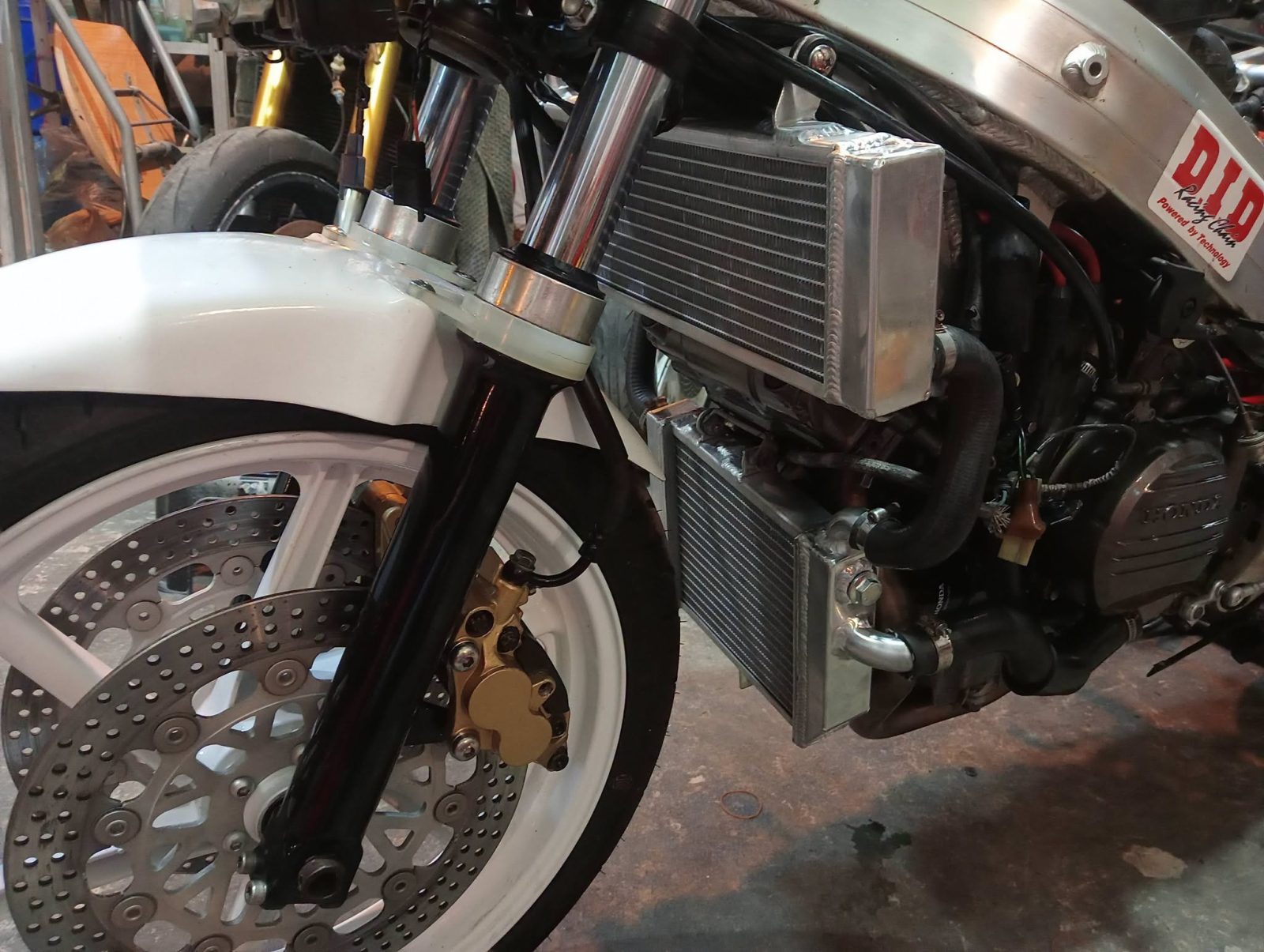
The V4 runs hot, and Thai traffic runs hotter — so rather than patch a pair of thirty-year-old cores, the NC30’s twin-stack cooling system has been renewed outright. Two brand-new hand-welded aluminium radiators now sit one above the other behind the front wheel, plumbed in and ready, their bare TIG-seamed tanks looking almost too good to hide behind bodywork.
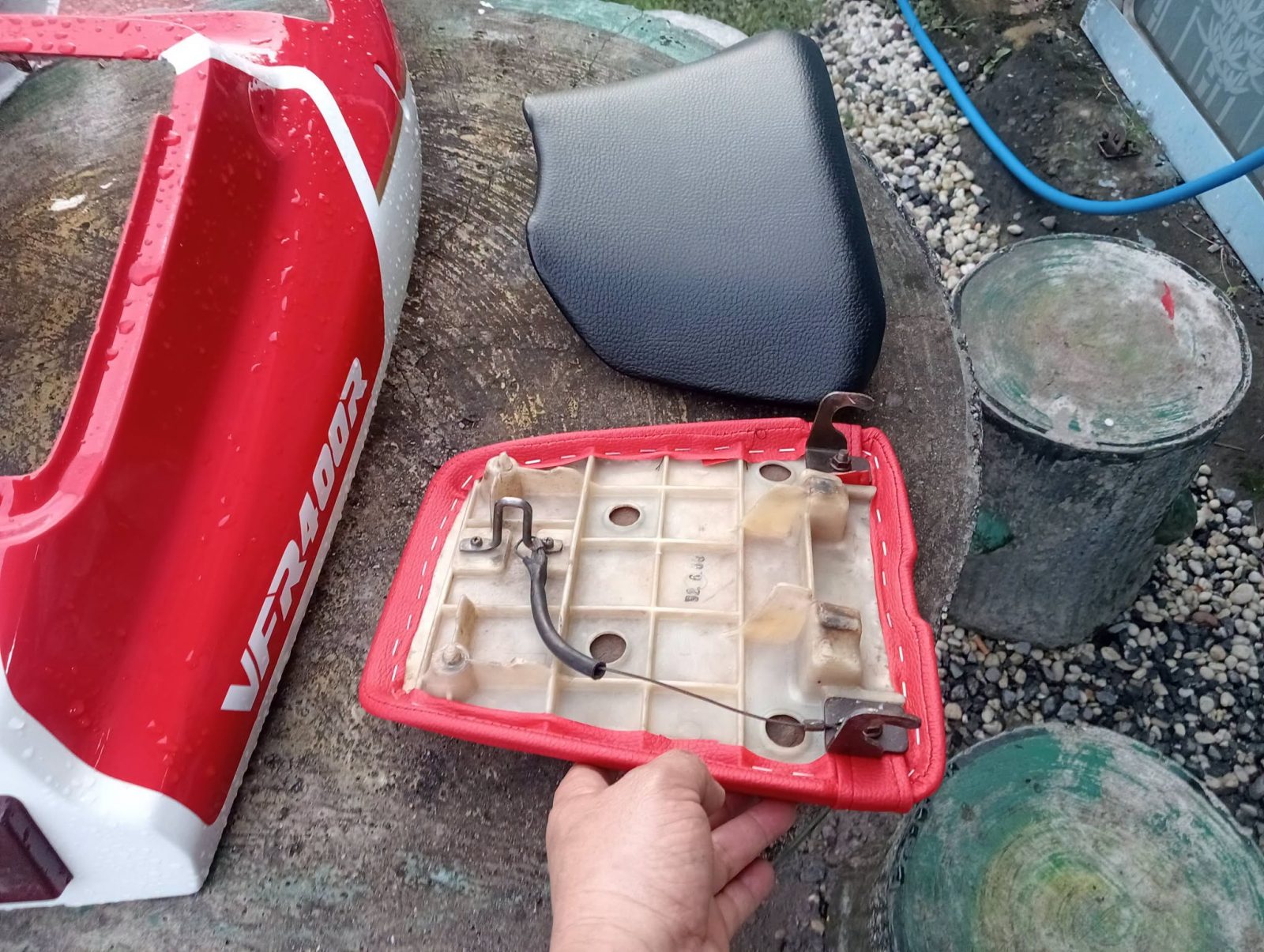
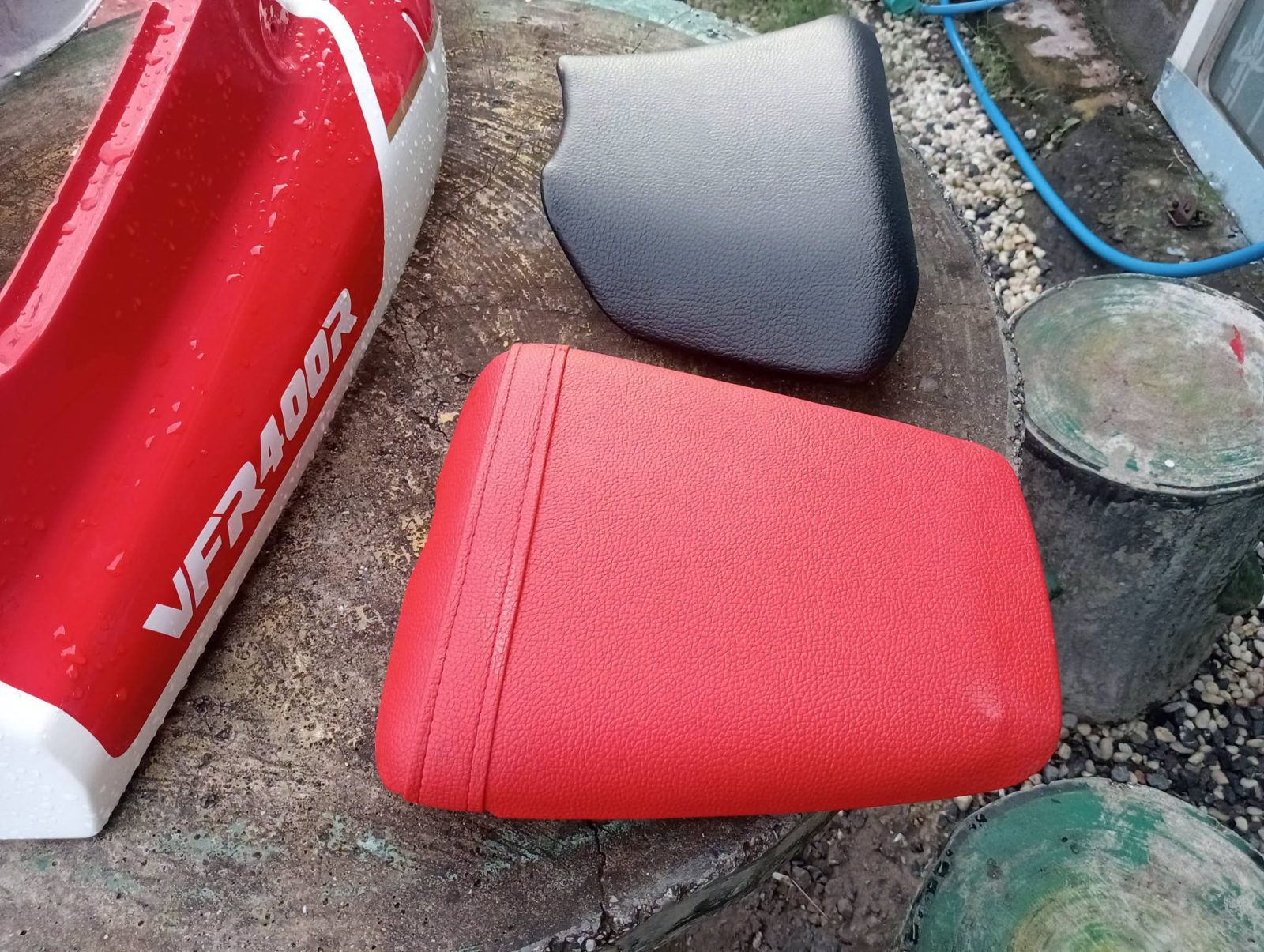
The comfort side got the same treatment. Both seats have been re-covered on their original bases — the rider’s in fresh black, the pillion pad in bright red — new covers, new stitching, thirty years of wear gone in an afternoon.
And then the reason the pillion pad is red: the first piece of painted bodywork is back. The seat unit, finished in red and white and wearing crisp new VFR400R decals, photographed still wet from its first wash. After weeks of bare metal and primer grey, this is the first real glimpse of the machine this has been heading towards all along. The tricolour isn’t coming anymore — it’s here, one panel at a time.